
Snow Lake & Hispar La trek
Pakistan
4.8 Based On 5 Reviews
8 Trees Planted for each Booking
Details
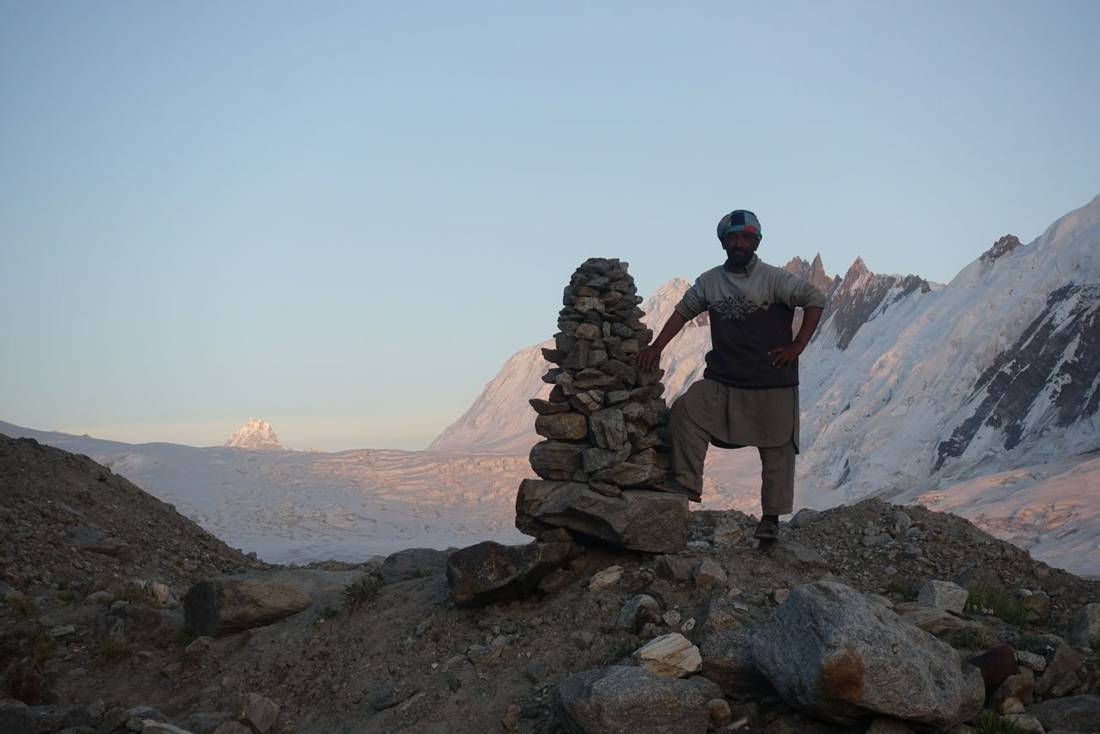
This trek follows a remote and rarely trekked glacier to cross Hispar La (5,151m) into Hunza valley.
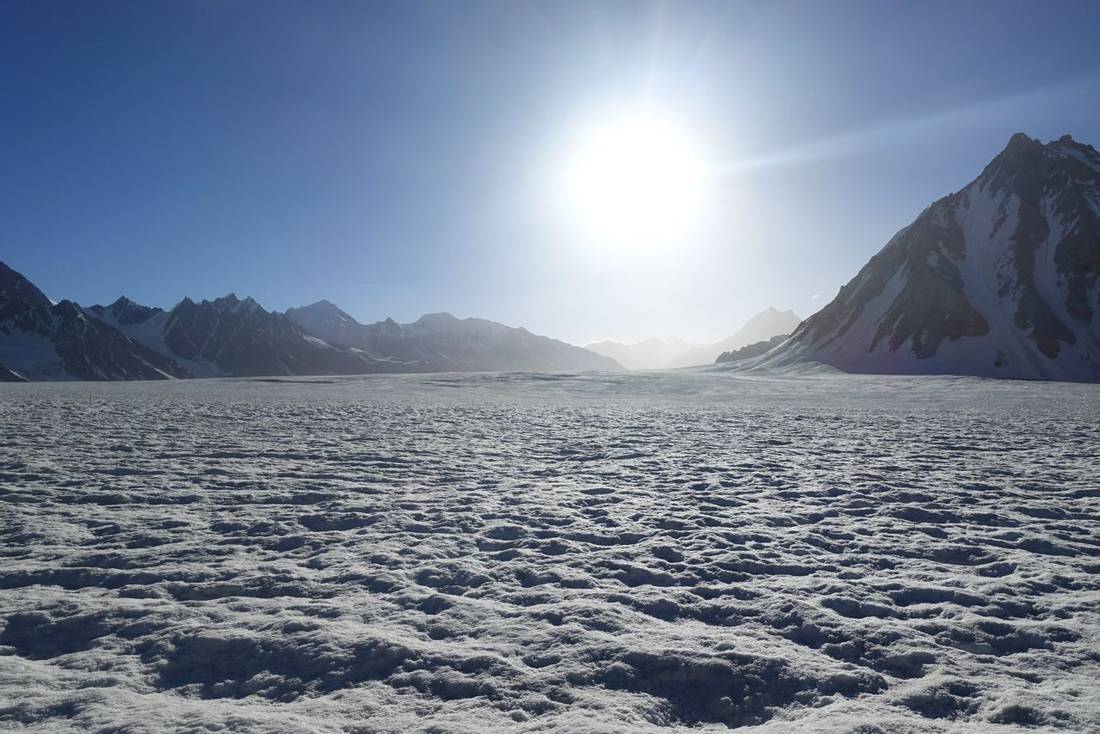
Snow Lake is a high altitude glacial basin over 16km wide located at the head of the Biafo and Hispar glaciers. These glaciers meet at the Hispar La. This makes this system the greatest concentration of glacial ice outside Antarctica. These rivers of ice connect two ancient mountain kingdoms. This is Hunza in the West and Baltistan in the East. As this region is so remote it serves as the last stronghold for many animals. There are Himalayan bear, ibex, markhor and the snow leopard.
This region has long fascinated explorers of the Himalaya. The first foreign visitor, Martin Conway, gave Snow Lake this name in 1892. He described this area as "beyond all comparison the finest view of mountains it has ever been my lot to behold." The mountaineer, Eric Shipton, described this region as ‘the last blank on the map'.
Towering high above these glaciers are high peaks of the Karakoram. These include Kanjut Sar (7,760m), Distaghil Sar (7,885 m) and Makrong Chhish (6,607m). There is the Latok group (Latok I: 7,145m, Latok II: 7,108 m, Latok III: 6,949m, Latok IV: 6,456m) and Baintha Brakk/The Ogre (7,285m). The Ogre was first climbed in 1977 by Britons Doug Scott and Chris Bonington. They had an epic descent with Scott breaking both of his legs and took a week to reach Base Camp.
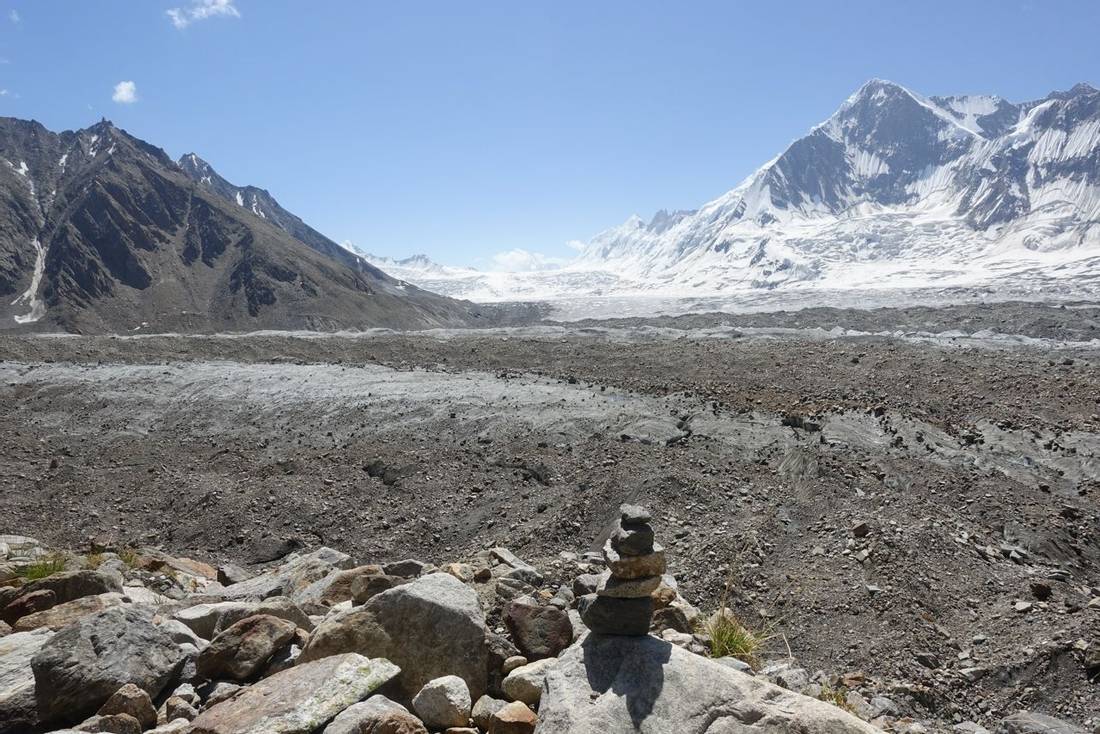
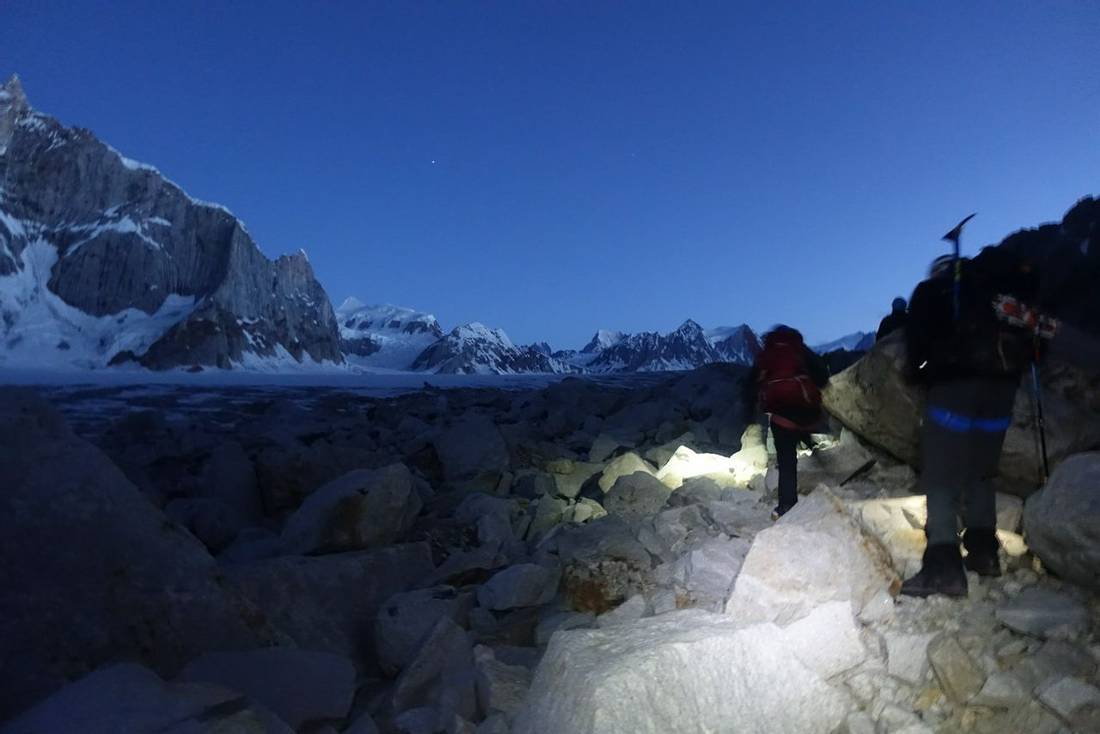
The trek starts by following the K2 Base Camp trail and then on the first day turns West onto the Biafo Glacier. The trail for the next few days follows loose rocky moraine ridges on the glacier. The campsites at Namla, Mango and Baintha are in grassy areas behind lateral moraines. From Baintha camp we walk on the glacier and follow the wide ice highway. This makes the walking easier than the loose rock earlier in the trek.
Having reached the highest point of our journey on Hispar La at 5,151m we descend into Hunza. When we arrive at Hunza village we complete the traverse. The Hunza region has a language and culture very different to Baltistan.
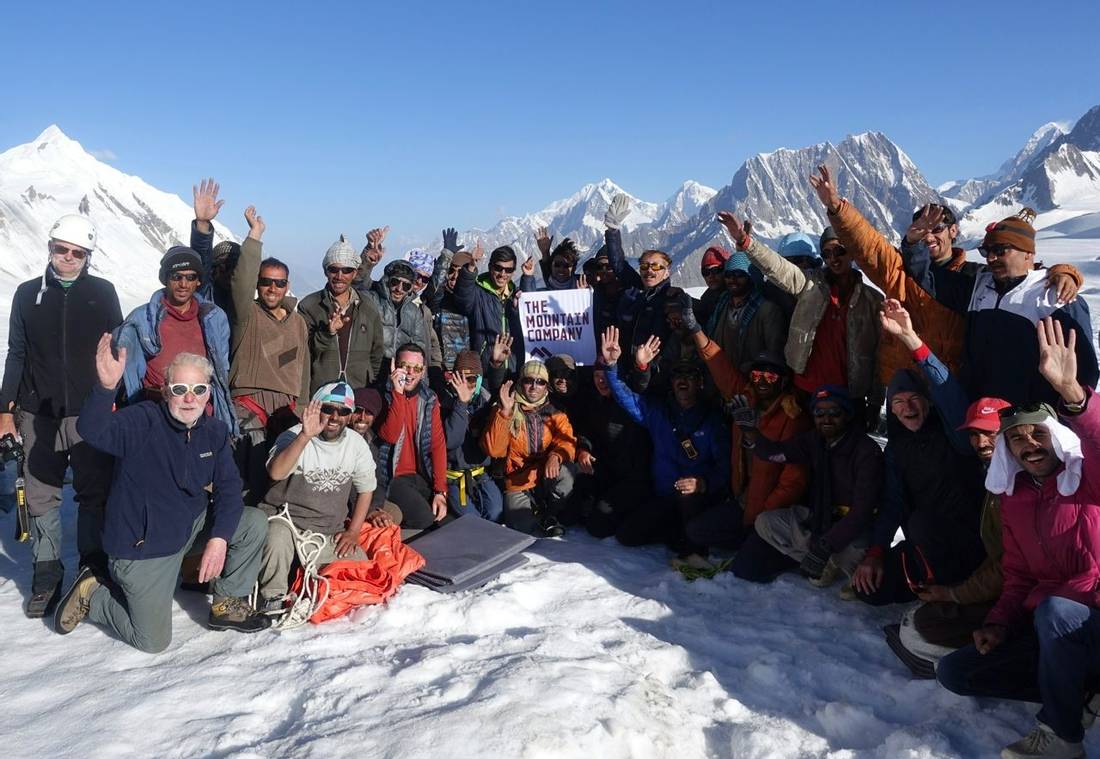
- We are Karakoram trekking specialists having operated trips in Pakistan since 2004. The Mountain Company organised a successful Snow Lake & Hispar La trek in July/ August 2019. For more information on how this trek went please take a look at our Trip Report.
- We work with some of the best mountain leaders with deep knowledge of trekking in Karakoram. Unlike many other operators we use trained international leaders for this trip.
- We have included a gradual ascent profile in our itinerary for this trekking holiday. This will help you acclimatise to the high altitude.
- Our AITO Traveller Reviews for Snow Lake have a holiday rating of 100%. Based on client feedback we won the 2018 Gold Award as AITO Tour Operator of the Year. Read more about our Testimonials and Awards.
- We pay for private weather forecasts from EverestWeather.com. We also use in house forecasting throughout the duration of this trek.
- We send a Thuraya satellite phone on our group treks in Pakistan. Your leader will have reliable communications for logistics, planning and group safety. We use GPS to upload your location daily on to Google Maps to track your progress during the trek.
- We provide a range of tasty meals for breakfast, lunch and supper. For breakfast we provide fresh coffee from our Bialetti Moka coffee machine.
- We bring a comprehensive medical aid kit. There will also be a portable altitude chamber (PAC or Gamow bag).
- Our team with first hand knowledge of this trek provides pre trip support.
Route Map
Itinerary
You will be met on arrival at Islamabad airport and driven back to the hotel. Please note we provide complementary airport pick up and hotel transfer for only two group flights on Emirates. If you arrive on a different flight and would like an airport pick-up there will be an extra charge for this service.
At some point during the day (time to be confirmed) the trek leaders will give a full trip briefing will be given at the hotel.
This morning we take the PIA flight to Skardu in Gilgit-Baltistan. If there is a cancellation of this flight then today we will start driving Karakoram Highway (“KKH”). It takes two days to drive KKH and on the way we have one night at the hotel in the town of Chilas.
If we flew as planned to Skardu on Day 2 then this is a day to explore the town. We walk to the main high street and look around the bazaar. We visit the Skardu fort which has a good view of the Indus river. If we are lucky we could watch a game of polo in the evening.
If we started the drive along KKH yesterday then we should arrive at Skardu by mid afternoon.
We have a spectacular drive on a winding jeep trail with several steep sections. A short distance from Skardu we cross the Indus river on a bridge near the confluence with the Shigar river. We drive up the wide open Shigar valley passing some larger villages and their fields.
Further up at the next river confluence we follow the Braldu river upstream. As we ascend the gorge it gets steeper and more arid. We pass a few villages with green fields from irrigation and shaded by apricot trees. Askole is the last village in this valley at the road head. This is the last village we will see until the end of the trek.
The time to drive to Askole depends on the condition of the road which varies year to year. The Braldu section is prone to landslides and these can block the road. The locals are very good drivers and will come up with a solution to clear the road or use jeeps on the other side.
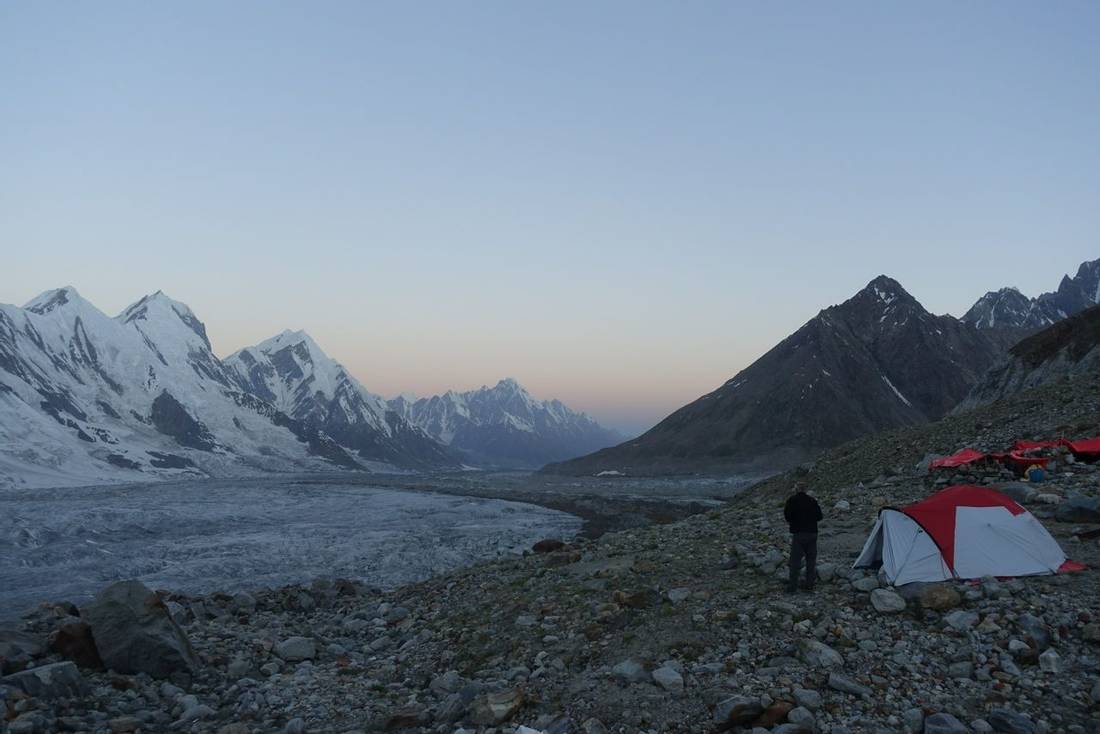
The trek starts from Askole by following the same trail as K2 Base Camp. At Korofong we turn off this main trail and head West onto the Biafo Glacier. The trail ascends over a shoulder to follow the left lateral moraine. We walk over loose rock and follow an indistinct trail. Further on we descend onto the glacier then back on to the left bank at Namla. This is a lovely place to camp in a grassy area behind a lateral moraine.
From the camp we drop down onto the glacier and walk near to a fracture zone on the glacier. We move over to the centre of the glacier where we follow several moraine ridges. Underfoot there is loose rock making this a rather challenging day. We set up camp at Mango on the left bank of the Biafo glacier. This place is also in a grassy area.
From camp we descend back onto the glacier. The route continues up the centre of the glacier on a broad highway of ice. This makes the walking easier than yesterday. We cross over to the right and come off the glacier to a grassy area at Baintha. We camp here for the night.
This is a rest day for you and the trek crew to help with acclimatisation to the high altitude. You can relax in camp or if feeling energetic walk up a ridge behind camp. From here there are fine views of the Latok group and the Ogre. Look out for Ibex that are often seen on the grassy slopes above camp.
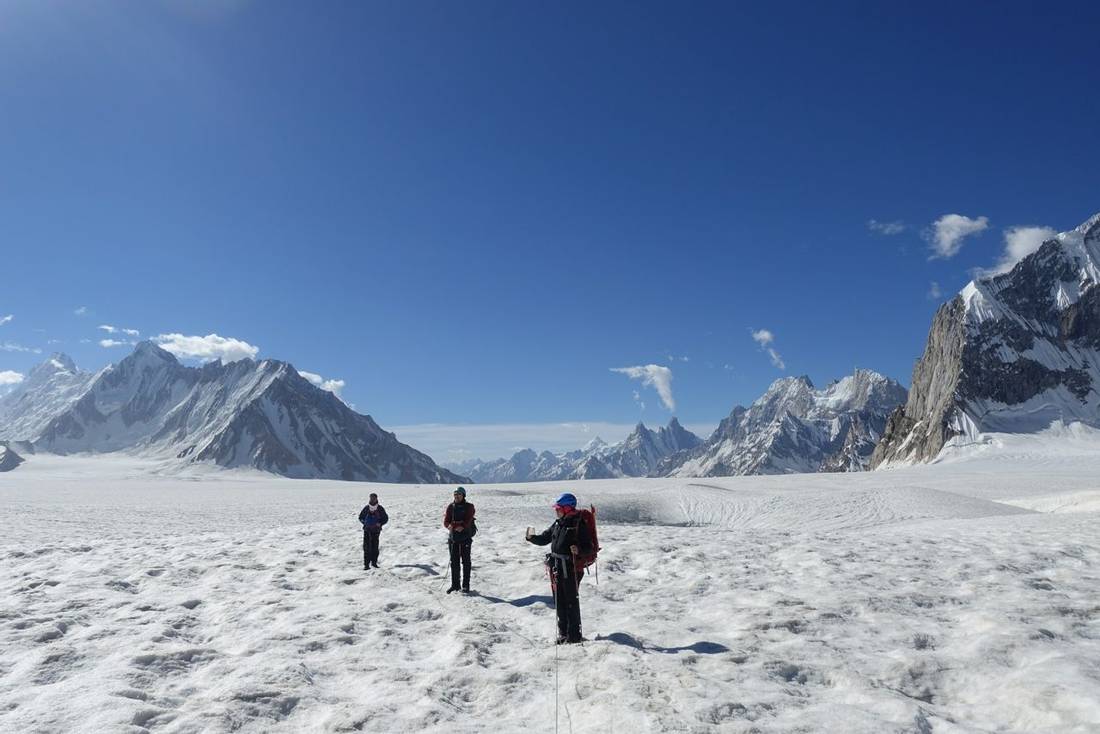
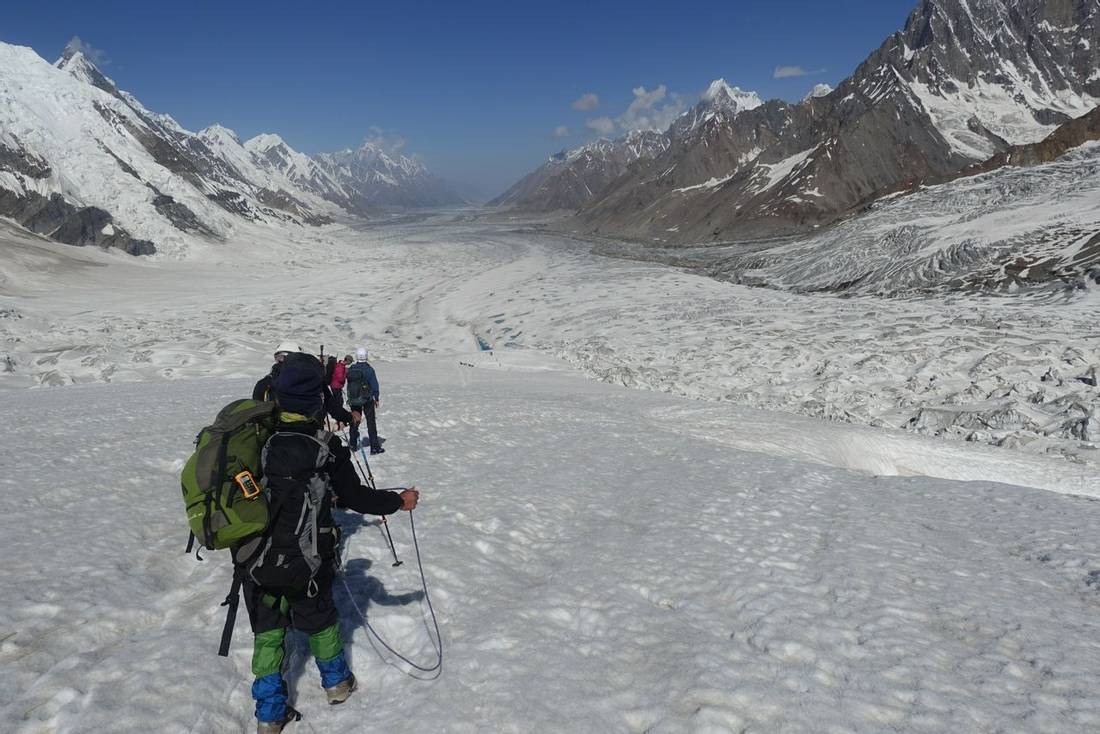
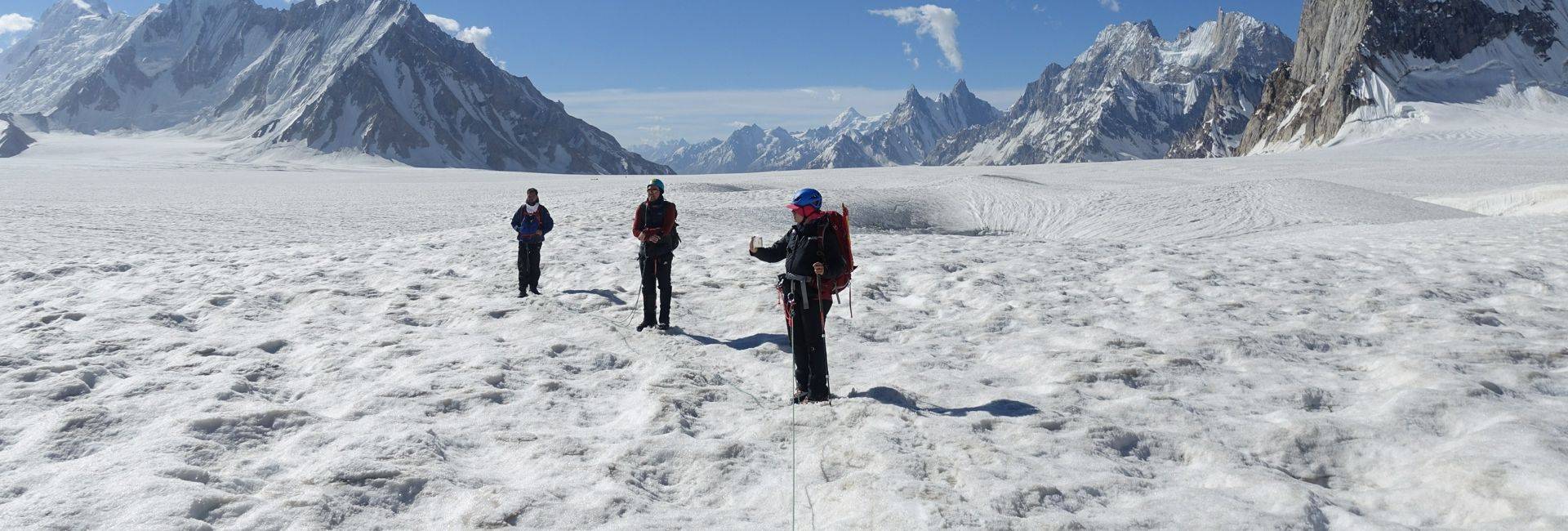
From camp we follow a steep and loose trail to get onto the glacier. Once there we follow the flat glacier making straightforward walking. Further along the glacier sometimes there are open crevasses depending on the conditions. If so, we rope up to safeguard our passage. There are superb views of many peaks including the Ogre at an altitude of 7,813m. Today we get the first views of the Hispar La and Snow Lake. We camp at Morfogoro located off the glacier.
Once we are back on the central glacier, we walk on flat ice making for easier going. There are more crevasses today as we make our way higher up the glacier. We will walk together and remain alert.
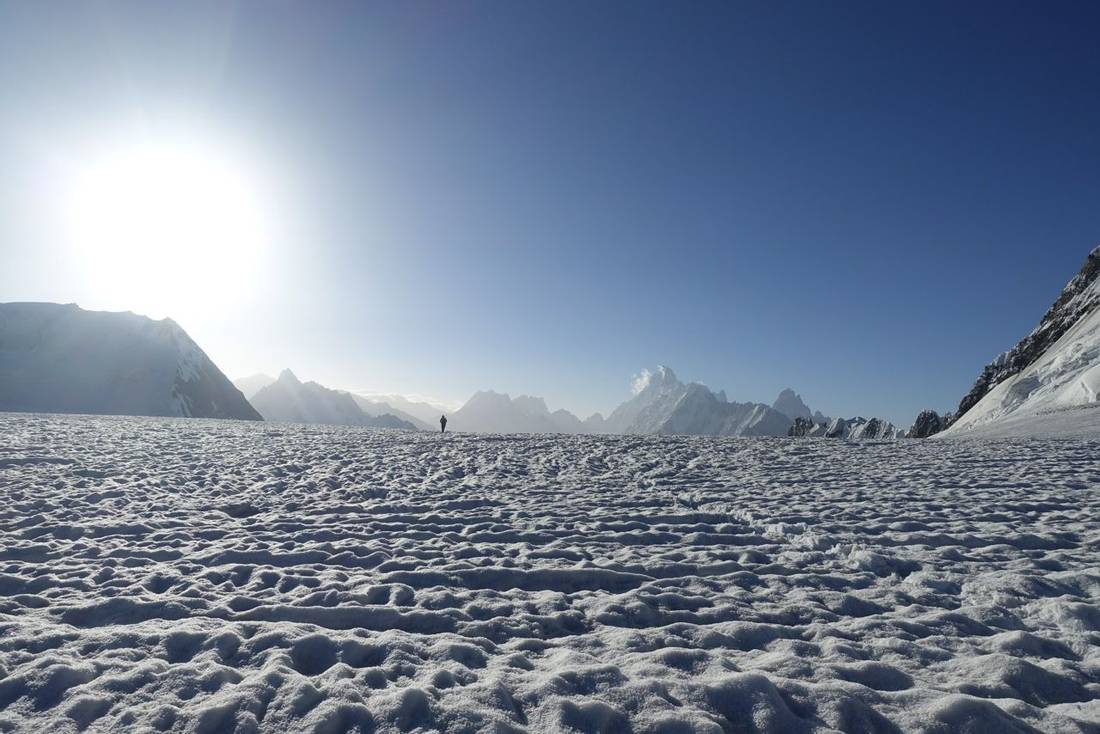
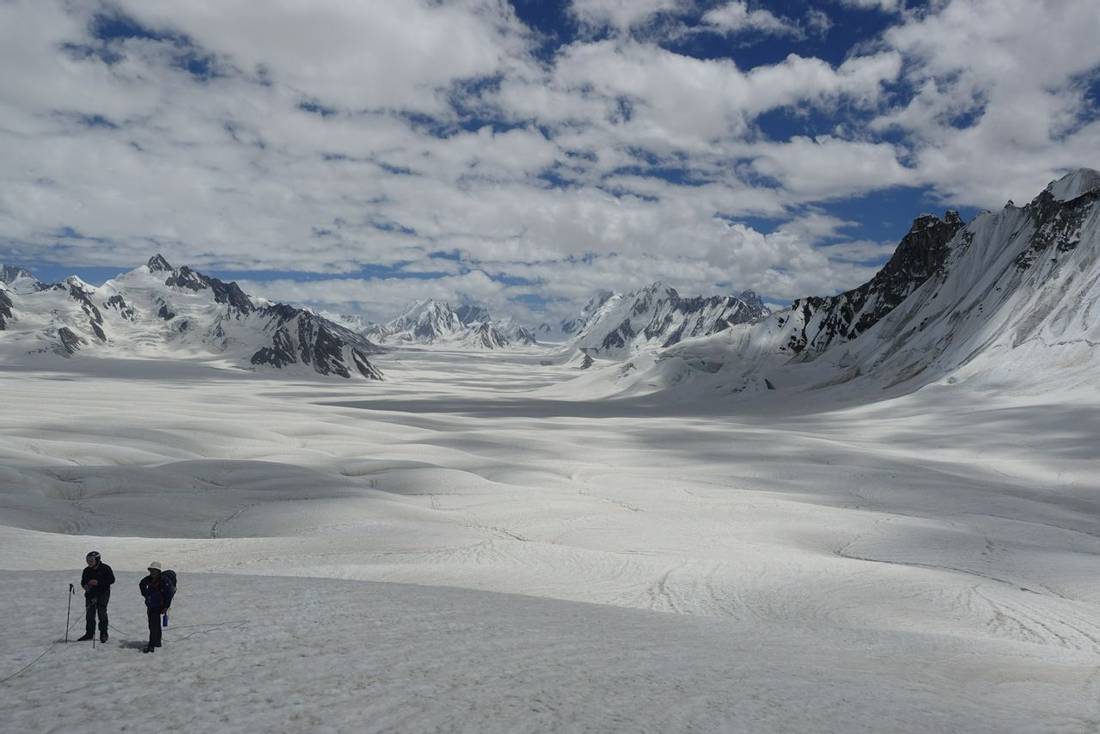
Today we walk to the south end of a large snowy flat area known as Snow Lake. We find our way through a network of crevasses. Snow Lake is a high altitude glacial basin over 16km wide at the head of the Biafo and Hispar glaciers. We camp at Hispar La Base Camp at an altitude of 4,590m.
We traverse the vast Snow Lake area and make the ascent to Hispar La. The climb up to the pass is not too steep although it feels quite strenuous at this altitude. We also have to be aware of the crevasses in this area. The views at Hispar La are fantastic looking down Biafo glacier to Snow Lake and The Ogre. On the other side we look down Hispar glacier to peaks in Hunza. We camp on the glacier at Hispar La at an altitude of 5,151m.
After an early start we descend from Hispar La through a crevassed area. Later on the glacier flattens out. Further down we have to cross Kani Basa glacier. This creates a fracture zone where the two glaciers collide. Shortly afterwards we reach our camp at Kani Basa. This is in a grassy ablation valley with good views of Kanjut Sar (7,760m).
This is a challenging day as we have to find our way through a series of moraine ridges. We climb over loose scree slopes then cross several glacial streams. We camp at Yutmaru for the night on the right side of the glacier.
We start the day by crossing a side glacier and then climb over some more loose scree. Where there is a path we see a range of beautiful flowers. We cross other sections over loose scree until we arrive at Shigam Baris. This is a small grassy campsite.
After an hour we descend down a steep bank to cross a smaller glacier coming from the side. We are then back to the same valley as before where the walking is good. The camp at Bitanmal is in a large meadow often used by herders from Hispar village.
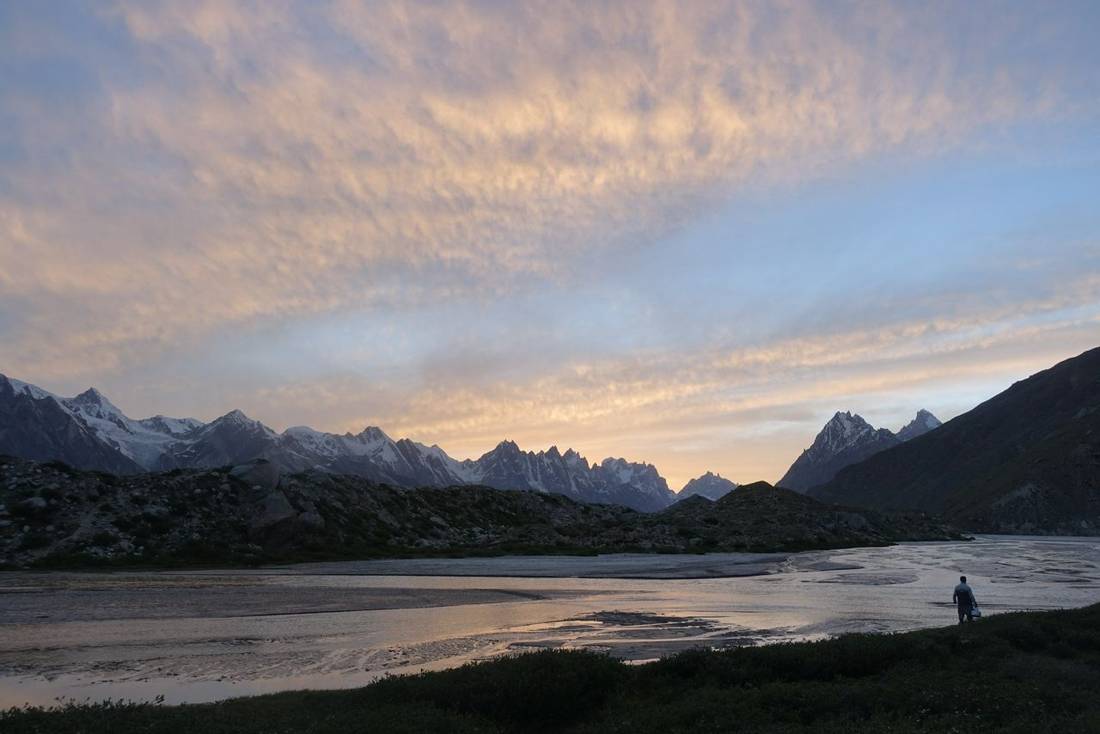
From our camp at Bitanmal we continue down the valley. We start off by crossing the last small glacier coming from a side valley. We see Hispar village a few hours before you reach it. This is the first sight of civilisation since leaving Askole. Finally, we cross a bridge to reach Hispar village. We enjoy seeing the vibrant green of the orchards and fields after the black and white scenery higher up. We camp in a grassy campsite close to Hispar village.
We take a jeep for a couple of hours to Nagar village. The drive follows a rather narrow track before reaching the Karakoram Highway. We drive to Karimabad where we check into a hotel and the rest of the day is free to wash up, relax and explore the town.
Hunza valley is very beautiful and today we have the chance to explore Karimabad. This is an interesting town situated on a hillside to the north of the road. There are views of the fertile valley below and glimpses of snowy mountains. We will visit the forts of Alti and Baltit dating from the 13th Century. The Baltit fort, once the home of the ruling Mir, guards the valley and is now a museum. The Alti fort is even more dramatic perched above the Hunza river. In the afternoon we dive to Gilgit.
We take the morning flight to Islamabad (inshallah!). If the flight does not operate due to cancellation we start the drive the KKH to Chilas.
If we flew to Islamabad yesterday then we will spend today sightseeing. If driving the KKH we arrive in Islamabad in the late afternoon. In the evening we will have a final group meal to celebrate our mountain journey.
Transfer to Islamabad airport for the flight back home. End of trip.
Dates & Prices
We provide an early bird discount for the first people paying their deposits to make up our minimum group size
For private and bespoke trip, please contact us
Enquire HereWhat's Included
- Internal flights. The flights are Islamabad - Skardu - Islamabad. If cancelled then we will drive on Karakoram Highway.
- Twin-share rooms at hotels.
- Breakfast only in Islamabad, all meals are included in Skardu and while on the trek.
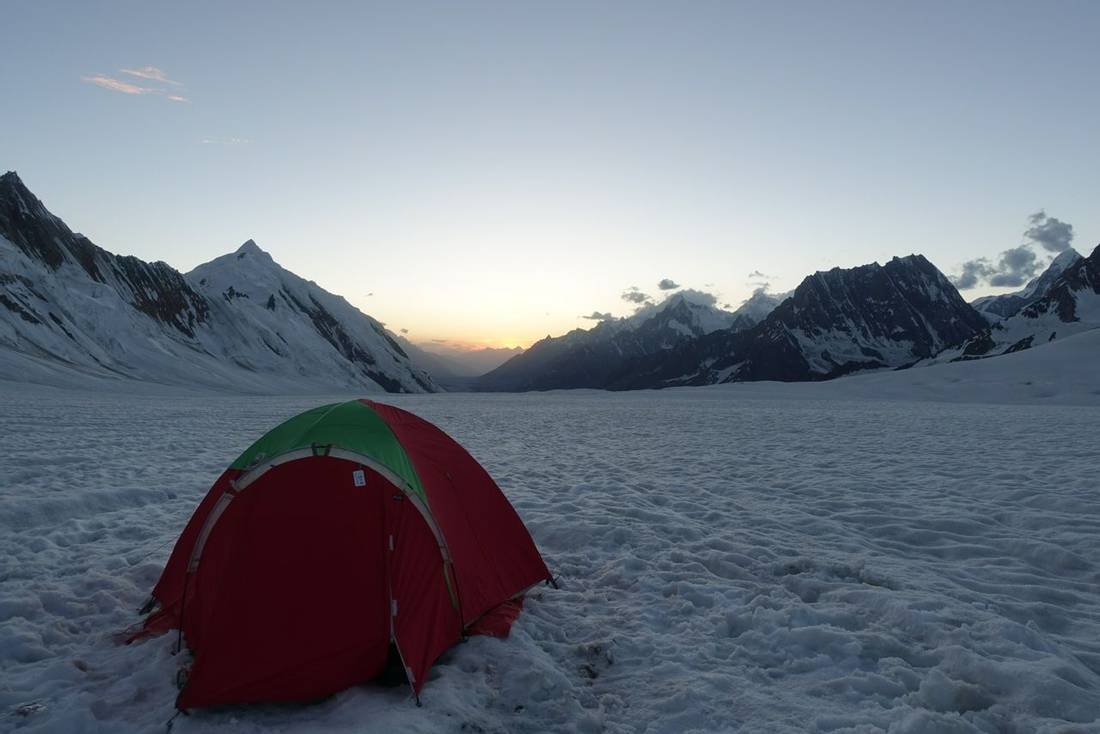
- Twin share tents while on the trek. These are three-person domed tents with plenty of space for two people sharing plus gear.
- Trekking arrangements. Including permits and fees, tents, International and Pakistan guides, porters, and cooks.
- Porters and/or pack animals to carry your main bag. The porterage allowance is 15kg.
- Weather forecasts for the K2 region during your trek.
- Thuraya satellite phone for organising logistics and medical evacuations. It can also be also used for personal calls at extra cost.
- Portable high altitude chamber (PAC bag) and expedition medical kit.
- GPS tracking on Google Maps. Your friends and family can track your progress during the trek.
- UK-registered charity, Pipal Tree, will plant 8 trees for you in the Gurkha Memorial Forest in southern Nepal.
- Full financial protection for bookings from the UK (ATOL) and internationally (ABTOT). Our Air Travel Organiser’s Licence (ATOL) number is 10921. Our Association of Bonded Travel Operators Trust (ABTOT) membership number is 5365).
- Pre-departure support and advice from The Mountain Company. We are available by email, phone, Zoom, or face-to-face meetings
What's Not Included
- International flight to/from Islamabad.
- Travel & trekking insurance.
- Pakistan visa for 30 days.
- Lunch and evening meals in Islamabad.
- Personal clothing & equipment, please see Practical Information for kit list.
- Tips to the trek crew. Each trekker should budget for giving tips into the group fund. This should be in the region of £140 or US$175.
- Other items not listed in “What is included”.
Accommodation
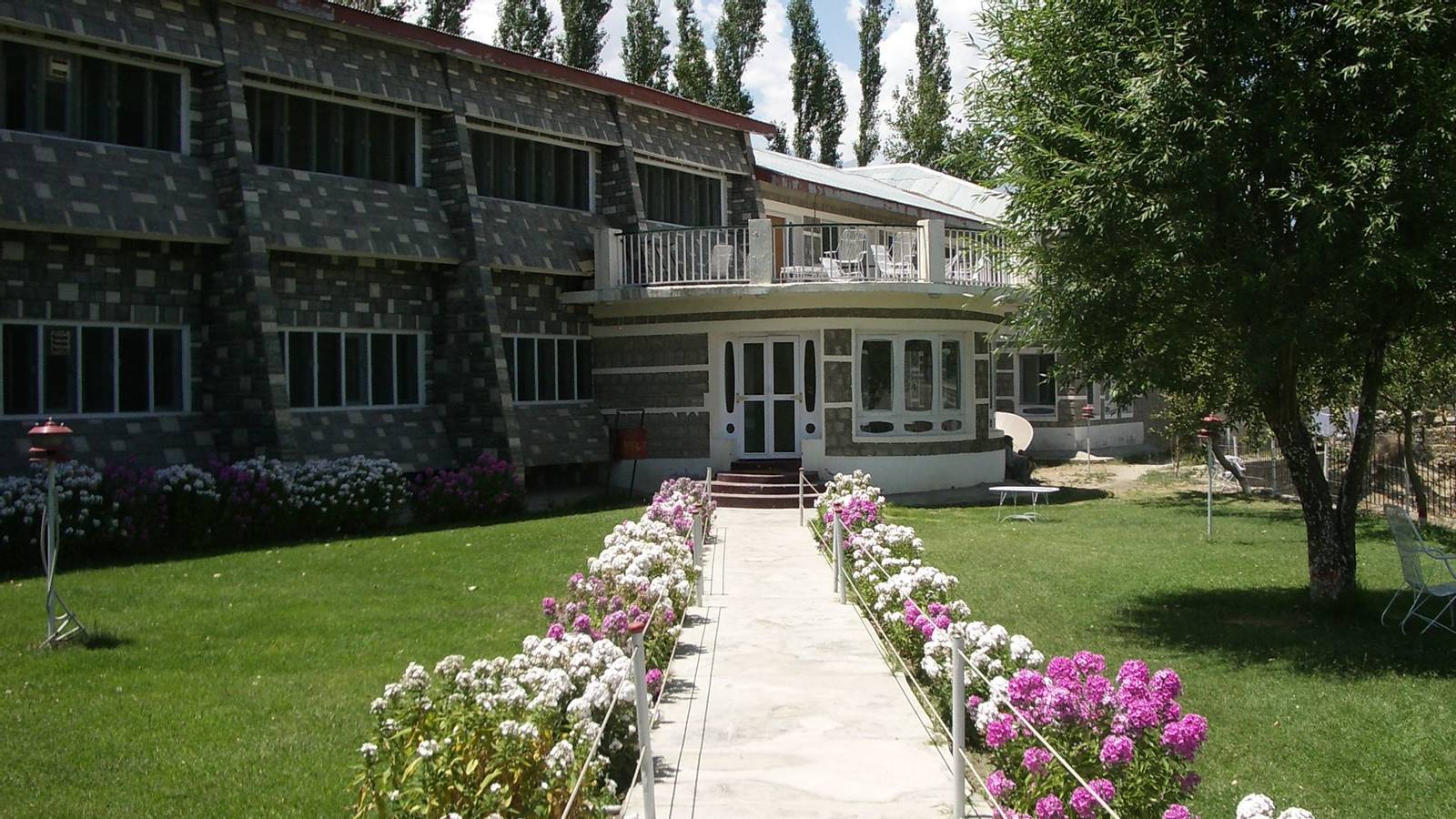
K2 Motel in Skardu
K2 Motel is in a lovely position overlooking the Indus river. It is the classic place that many expeditions and trekking groups have stayed over the years.
It is a short walk taking about 15 minutes into the main part of Skardu town and the bazaar. K2 Motel has 28 rooms and a restaurant plus a garden at the back of the property.
Hill View Hotel in Islamabad
Hotel Hill View is a modern hotel and is a comfortable base for our groups while in Islamabad. It is a short walk to Jinnah market where there are good restaurants and shops. There is wifi at the hotel.
Practical Information
A Typical Day On Camping Trek in Pakistan
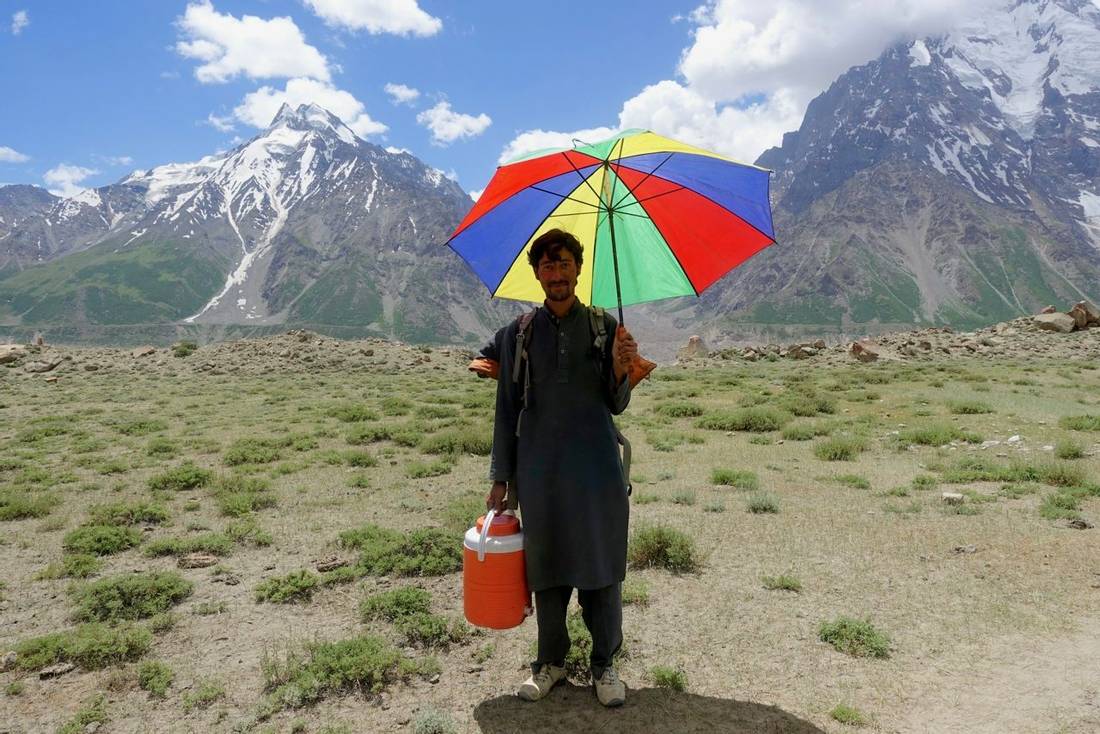
We provide a comfortable experience on our camping style treks in Pakistan. Our team works hard to support you so that you can relax and enjoy the trek. We provide personal tents, mess tent, kitchen tent and toilet tent(s). The camp will be set up and dismantled by the trek crew. We bring along a cook and kitchen helpers to provide the meals.
The day starts with an early morning mug of tea in the mess tent. Before breakfast you pack your overnight gear into your duffel bag. During breakfast the trek crew pack away the tents. The porters arrange their loads and set off on the trail in the cool of the morning. After breakfast, between 7am and 8am, we start walking.
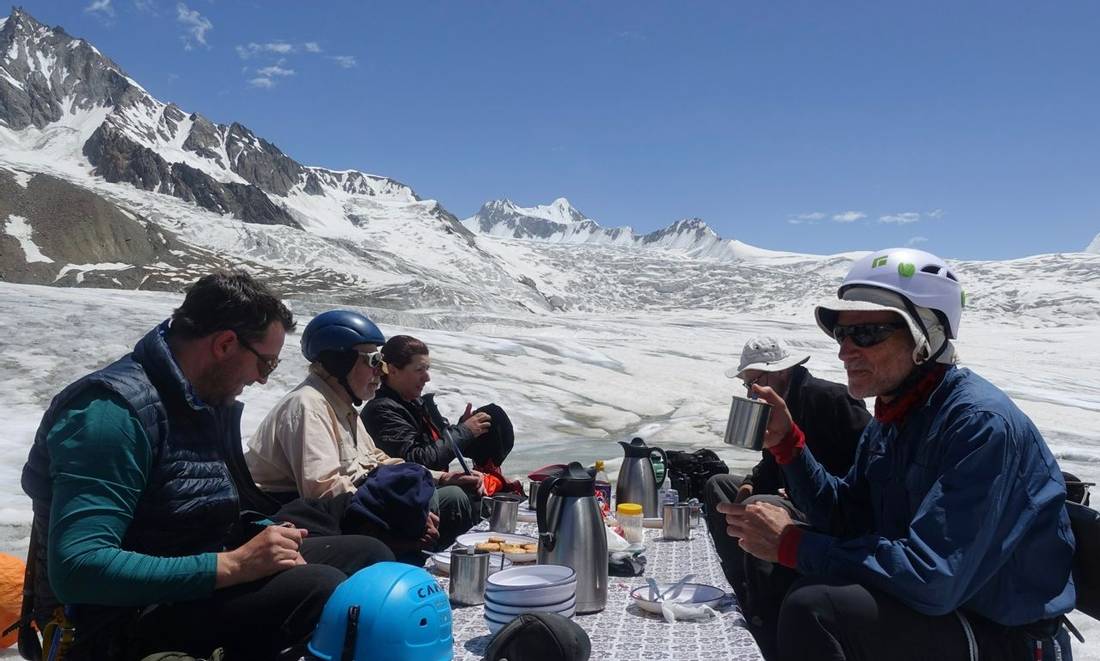
The pace of the trek is moderate as there is plenty of time in the itinerary to reach the camp for tonight. There will be plenty of time to enjoy the scenery, take photos and explore the local villages. Lunch will be around midday at a spot by the side of the trail. Our cooks prepare lunch for us and the food is usually ready by the time the group arrives.
After lunch we continue the walk and on most days we arrive to camp by mid afternoon. Some of the trek crew would have gone ahead of the group to set up camp and to put up the tents. On arrival to camp you will get a hot drink and biscuits. In the evening our cook will provide a three course meal in the mess tent around 6pm.
After supper the leaders will discuss the plan for the next day. Afterwards people might stay in the mess tent chatting about the day’s events or playing cards. After a tiring day most people head to their tent quite early for the night. Tomorrow is likely to be very similar as today! The only difference is that if we are crossing a high pass or climbing to a summit we leave camp earlier in the morning.
Food provided on Camping Trek in Pakistan
While on a camping style trek in Pakistan we provide tasty and nutritional food. We make sure there is more than enough quantity to go around as trekkers will be hungry after a long day on the trail. Over the years we have worked on increasing the variety of the menus. We have expanded the list of ingredients provided to the cooks so they have more to work with.
For breakfast we provide porridge or cereal, toast or chapatis and eggs. There will be hot drinks including tea, hot chocolate and coffee. We provide fresh coffee from our Bialetti Moka coffee machine.
For lunch we stop at a convenient spot with water at the side of the trail. The cook and kitchen walk ahead of the group in the morning and lunch should be ready shortly after our arrival. After lunch we have time to relax before starting to walk again in the afternoon.
On arrival at camp in the afternoon you have biscuits and a hot drink such as tea or coffee. Around 6pm we serve a three course meal in the mess tent. The starter is often soup with popcorn or poppadoms. We have a range of main dishes and carbohydrates including rice, potatoes or pasta. Most meals are also served with delicious flat breads made fresh by the cooks.
We cater for a variety of dietary requirements. Our meals are suitable for vegetarians. If there is a meat dish then we also provide vegetarian options as standard. During booking we find out if you have any dietary needs and agree upon meal plans before departure. If you have any questions about the food provided please get in touch with us to discuss further.
Communications
We bring a Thuraya satellite phone for logistical, safety and personal use. Personal calls charged at £4 (US$5 or €4.50) per minute and £2 (US$3 €4.50) to send and receive SMS text.
Kit List for Snow Lake
This is the mandatory kit list for the safety of everyone in the group and to ensure a successful trek. You must have the following items tailored for Hispar La trek. The group leader will check your gear in Islamabad or Skardu before departure for the trek.
As a reminder, the weather on this trek will vary season to season and day to day as you ascend to higher elevations. At the start of the trek you will experience very hot conditions with temperatures up to 40 Celsius. You experience the coldest temperatures at Hispar La at an altitude of 5,151m. Overnight lows here will be down to around -10 Celsius.
You should bring a rucsac or backpack for gear required during the day. Your pack should contain items such as warm clothes, jacket, camera, water bottles, personal first aid kit and snacks. The weight limit is 5kg. A porter will carry the rest of your personal equipment packed in a duffel or kit bag. The weight limit for your duffel bag is 18kg. Please mark your bag on the outside for easy identification.
Print the kit list and tick items off as you pack them then weigh your kit bag before you come on trek.
Footwear
- B2 rated mountaineering boots.
- Walking Boots. A pair of water repellent boots with ankle support. Boots must be in good condition, the best approach is to get new boots and break in before the trek. Over the years we have had several boots fall apart so you should also bring trail shoes as a backup.
- Trail shoes. Used around camp and as a replacement if your walking boots fall apart!
- Sandals. Enclosed sandals are best to protect your feet during river crossings. Required for river crossings as well as two trekking poles.
- Walking socks.
Clothing
- Waterproof and Windproof jacket (with hood) and trousers (goretex or similar). For use if it rains or snows during the trek and in windy conditions.
- Trekking trousers. (eg. Mountain Hardwear Mesa V2 or The North Face Paramount Peak).
- Soft Shell Trousers.
- Long sleeve tops or shirts (not cotton).
- Micro fleece.
- Mid to heavyweight fleece or synthetic/ primaloft top.
- Sleeveless/ gilet or body warmer type fleece / synthetic top. This will help keep your core warm while not bulking when layering up. Gilet used in combination with base layers, other fleeces and down jacket. This provides the most warmth and insulation.
- Thermals or base layer for top & bottom (merino wool or synthetic).
- Medium weight down jacket.
Head and Gloves
- Fleece gloves.
- Mountaineering gloves (eg. Mountain Hardwear Medusa glove or Black Diamond Enforcer or Guide glove).
- Wool or fleece hat.
- Sun hat.
- Bandana or scarf (eg. Buff Headwear).
- Head torch. Bring extra batteries.
- Sunglasses. The lenses need to be Category 4 rated. They should have side protection or wraparound design.
For walking on the glacier
- Trekking poles (Black Diamond with “Flick Lock” are best). Two poles are mandatory for your safety. These will be helpful on steep sections of the trail and river crossings. Also for walking on snow or ice higher up.
- Gaiters. A pair of knee high gaiters used to keep boots dry if walking through snow or on wet ground.
- Climbing harness. Plus two 60cm slings, four screw gate carabiners, Figure 8 belay device and 3m of 5mm static cord for prusiks. [we have a limited number of “Harness packs” for rent. Please contact TMC office for further prices and availability].
- Jumar ascender (eg. Petzl handled ascender).
- Crampons. The best are universal crampons that you can use with trekking boots. Such as Stubai Universals or Kahtoola KTS crampons.
- Mountaineering ice axe with leash.
- Climbing helmet.
Personal equipment
- Sleeping bag. Overnight lows down to -10 Celsius.
- Fleece or silk liner for your sleeping bag. A liner protects your sleeping bag from getting dirty. Also helps by adding extra insulation to keep you warm at night.
- Sleeping mat (eg.Thermarest). On trek we provide everyone with a foam mat. We recommend two layers for insulation and comfort. We also provide everyone with a pillow.
- Day pack. Recommended size is around 40 litres. You need to have enough space to carry water bottles, camera, snacks and extra clothing and climbing gear. The pack should have a good waist belt. It is also a good idea to bring a rain cover to keep the contents dry.
- Stuff sacks for keeping your gear dry and organised. Or even better are fold dry bags such as from Exped.
- Two water bottles. Nalgene wide mouth bottles are the best. You may use a hydration pack lower down but the tube will freeze in the cold so ensure you still have two water bottles.
- Pee bottle. Recommended as means you do not have to get up to find the toilet tent at night! For men you can use an old water bottle. For women take a look at SheWee.
- Sunscreen and lip salve with a high SPF.
- Water purification tablets (Pristine, Biox Aqua or Aqua Mira).
- Favourite snack food.
- Books and cards etc.
- Camera with spare batteries and memory cards.
- Insurance certificate.
- Earplugs (optional).
- Baby wipes (optional).
- Hand sanitizer. Keep this in your day pack for use after a toilet break during the trek or before eating any snacks. We provide sanitizer for use before meals.
Travelling
- Duffel bag for your personal gear on the trek. A porter will carry your bag. Rugged and waterproof made of a plastic material. Size 100-120 litres. Eg. Mountain Equipment 100l or Rab 120l. Bring a small combination padlock to secure the bag.
- Travel clothes. You will need casual clothing for air travel days and time spent in Islamabad and Skardu.
- Toiletry bag with soap, travel towel, toothbrush etc. We provide toilet paper while on trek.
Personal first aid kit
We provide a comprehensive group first aid kit. Please bring personal medications and other items you might use such as:
- Any personal medications.
- Blister treatment (Compeed patches are the best)
- Rehydration powder (eg Dioralyte).
- Analgesics (paracetamol, ibuprofen and aspirin).
- Plasters and zinc oxide tape.
- Throat lozenges.
- Diamox (helps with acclimatisation).
Risk assessment for Snow Lake
You should be aware trekking in a developing country involves a risk of personal injury or death. You must accept these risks and be responsible for your own actions and involvement. Adventure travel requires an open and flexible attitude. You may experience extreme conditions and unpredictable weather. There could be last minute changes to the itinerary beyond our control. The ability to work in a team is an important aspect of our trips.
We have performed a threat and risk assessment for our Hispar La trek. Our trips have a degree of risk. This is part of the attraction of adventure travel and why so many people choose to join this type of holiday. By identifying the hazards we assess the level of risk. We have control measures in places to reduce this happening or to reduce the impact.
Our risk assessment is available to clients on request. We have listed below a summary of the significant risks and hazards identified by us:
- Personal security such as terrorism or kidnapping.
- Falls and trips resulting in physical injury e.g. slipping on ice or falling off the path.
- Altitude illness including but not limited to AMS, HACE and HAPE.
- Getting lost or becoming separated from group.
- Severe bad weather and conditions when camping.
- Climatic injuries (dehydration, sunburn, heat exhaustion, hypothermia or heat stroke). It will be very hot for the first few days of the trek with temperatures of up to 40 Celsius.
- Crossing a river with no bridge resulting in drowning and/ or a fall. There are several river crossings on the trail.
- Rock fall and landslides e.g. on the jeep track Skardu to Askole and sections of the trek.
- Snow and ice avalanches.
- Lightning strike.
- Wildlife, pack animals (e.g. donkeys or horses) or stray dogs. Pack animals can knock people off the path. Dogs can attack and bite. Discuss rabies vaccination with your doctor.
- Earthquake.
- Risk of fire in the hotel.
- Endemic local diseases. Discuss vaccinations with your doctor before departure.
- Physiological injury. Such as heart attack, appendicitis, hernia, toothache etc. in a remote area.
- Road traffic accident. The drive along the jeep track Skardu to Askole has sections with high degree of exposure.
- Flight accident on Islamabad – Skardu – Islamabad route.
- Contaminated food and/ or water.
This trip visits a remote area. You are away from the usual emergency services and medical facilities. Evacuation for a serious injury requiring hospitalisation could take up to several days. This delay could impede your ensuing recovery. Helicopters are the usual means of evacuation. They are not always available or hindered by poor weather and flying conditions.
Weather and conditions for Snow Lake
Snow Lake trek has a wide range of temperatures. This depends on the altitude, weather and time of day. In the mountains between 1,000m and 3,500m the nights will be cool around 5 Celsius. During the day temperatures can rise on a sunny day to 40 Celsius. Bring lots of water, sunhat and sunscreen. At higher altitudes temperatures range from about 20 Celsius to -10 Celsius.
The trekking season in Pakistan is from early July to end of August. From our experience of running trips in Karakoram the best time is mid July to mid August. It is likely you will get some rain while on trek when pulses of monsoon clouds push to the north. You should expect to get one third of the trek with sun, one third with cloudy conditions and one third with rain.
Islamabad is hot and humid in July and August as this is the monsoon season. Temperatures range from 30 to 46 Celsius with high humidity. The temperatures in Skardu at 2,340m will be cooler and is dryer as in the rain shadow of Nanga Parbat.
Suggested reading and maps
Maps
Karakoram Trekking Map 1:175,000. Published by TerraQuest- the best map to buy for K2 Base Camp and Snow Lake treks.
K2 and Baltoro Glacier Satellite Image Map. 1:80,000. (Geosystems)- this is a superb satellite photography. Available at Stanfords, London.
Karakoram geographical sketch map Sheets 1 & 2. Swiss Foundation for Alpine Research, Zurich. Scale 1:250,000- shows the whole Karakoram range including Ladakh in India. A copy of this will be available to look at on trek.
The Karakoram Highway by Open Road Guides, England Scale: 1:1,000,000
Books
K2: Triumph and Tragedy by Jim Curran
The Endless Knot: K2, Mountain of Dreams and Destiny by Kurt Diemberger & Audrey Salkeld
Clouds from Both Sides An Autobiography by Julie Tullis
Regions of the Heart: The Triumph and Tragedy of Alison Hargreaves by David Rose and Ed Douglas
Above the clouds by Anatoli Boukreev
The Last Step: The American Ascent of K2 by Rick Ridgeway
Quest for Kim: In Search of Kipling's Great Game by Peter Hopkirk
Trip Reports
To read our trip report please click on the link below to our blog:
Trip Report for Snow Lake & Hispar La led by Jo Clark in July 2019
Trip Report for Snow Lake & Hispar La led by Ade Summers in July 2016
Trip Reviews
Review by Mark S on 15/10/2016
Trekking in Pakistan. Excellent trek in a remote part of Pakistan to the beautiful Snow Lake. Very professional, safety-conscious and organised. Excellent individual service. ...
Show more Show lessReview by Emina on 27/08/2019
Snow lake and Hispar la. I trekked through the beautiful mountains and on the Biafo glacier crossing over snow lake and the Hispar la pass in Pakistan with the mountain company. The trek was organised by The Mountain Company. I have trekked with the mountain company 3 times and each trek was run using a western leader. The Mountain Company always e xecutes trips that operationally run smoothly and focus on clients' safety whilst ensuring that everyone has an unforgettable travelling experience. ...
Show more Show lessReview by Piotr Zycki on 26/11/2019
Spectacular Snow Lake trek in Pakistan Karakorum. The Snow Lake is one of the most amazing mountain journeys in the world. The route begins at Askole (Baltistan), together with the better known Baltoro-Gondogoro-K2 base camp trek, but it soon forks off, turning west and enters the glacial wilderness. The route goes gradually up the Biafo glacier, t hen climbs more steeply to Hispar La (mountain pass at c.a. 5100 m) and then goes down along the Hispar glacier toward Hispar village in the Hunza region. Crossing Hispar La is never guaranteed and there are years when this is not possible because of huge crevasses blocking the way. We were lucky to have good weather and snow conditions and we managed to complete this spectacular trek. TMC guides are certainly experienced and very well prepared to handle even the most challenging trekking conditions. The Snow Lake trek has an exploratory character as the route is not simply marked on the glacier and so even finding the way is a challenge. There are decisions to be made about the camping places and details of the itinerary as these may need to be adjusted on a daily basis. As this trek follows two glaciers, the safety of both the trekking members and the crew is of utmost importance. Taking care of all these elements requires constant attention and effort on the part of the trekking leader. Our TMC leader (Jo) did her job perfectly. ...
Show more Show lessGallery