
Manaslu Circuit with Tsum Valley trek
Nepal
5 Based On 9 Reviews
7 Trees Planted for each Booking
Details
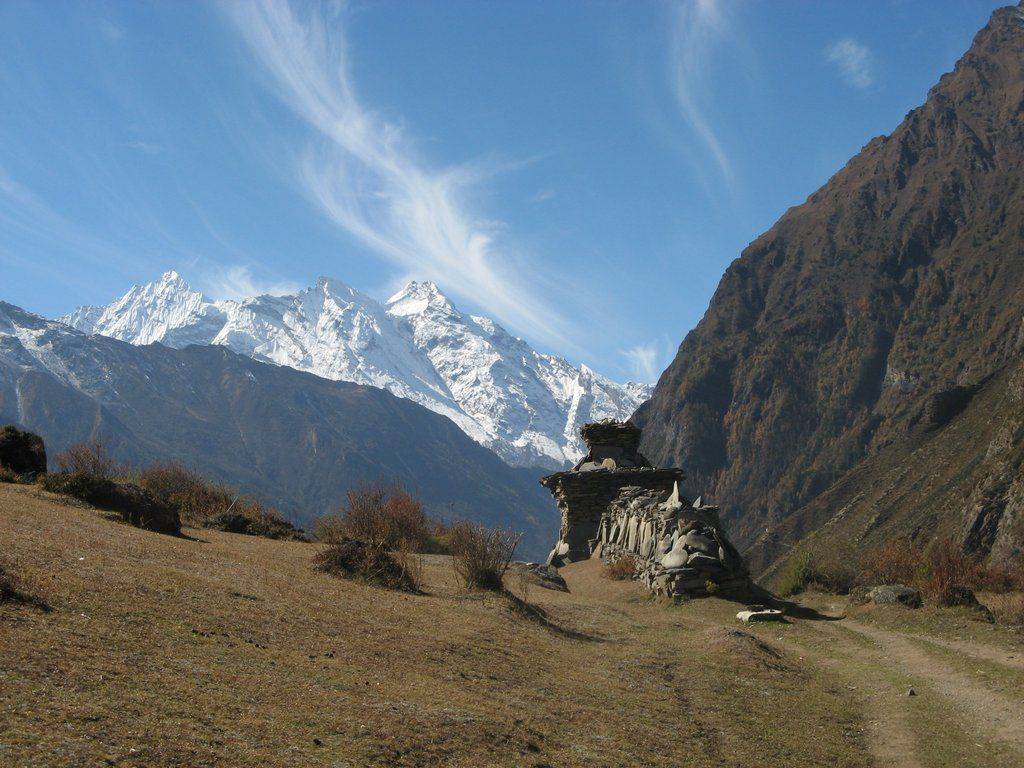
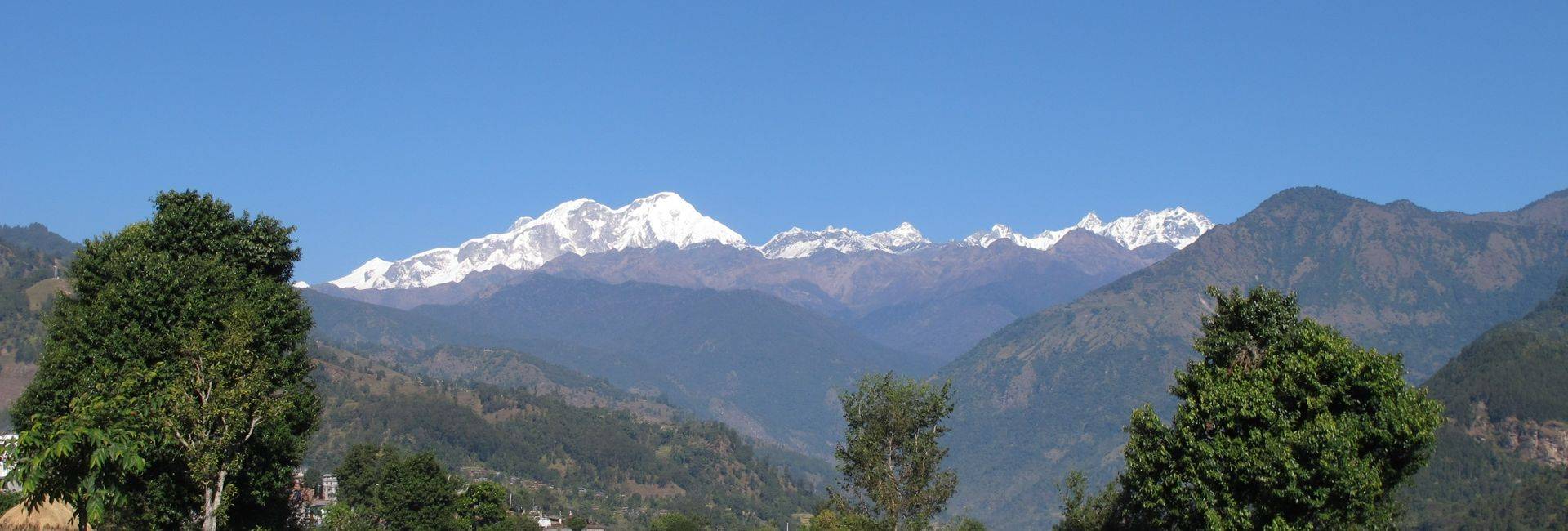
Manaslu Circuit is one of the classic treks in Nepal around an 8,000m peak called Mount Manaslu. Our itinerary also includes a visit to Tsum Valley plus four side trips away from the main Manaslu trail.
Following a successful reconnaissance trek by Roland Hunter in April 2026, we have recently updated our Manaslu itinerary. Our primary focus was to identify trail options away from the busier main routes by integrating side trips with fewer other trekkers. Additionally, improved road conditions at the start of the valley now allow us to drive further up the Budhi Gandaki valley. We have incorporated four side trips to showcase the region's hidden gems. They are Prok/Kal Tal Lake (Day 11), Pungyen Gompa (Day 13), the Manaslu Base Camp viewpoint (Day 14), and Samdo Peak/Rui La (Day 16). We have built-in "climb high, sleep low" days (like the Kal Tal and Pungyen Gompa hikes) for effective acclimatisation to the high altitude before the Larkya La pass.
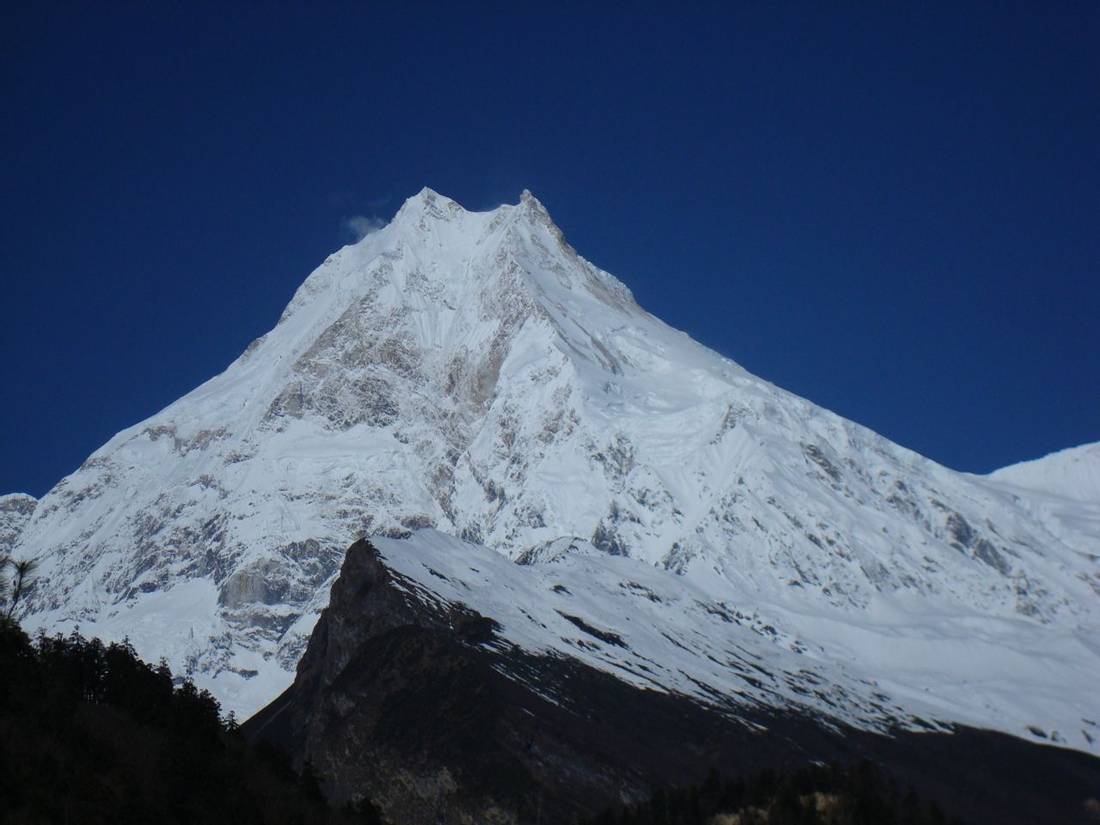
Mount Manaslu is the world’s eighth-highest mountain at an elevation of 8,156m. A Japanese and Nepalese team climbed to the summit for the first time in 1956. The Manaslu Circuit with Tsum Valley trek is a walk around Manaslu, including a visit to Tsum Valley. This itinerary is three days longer than the Manaslu Circuit trek. Tsum is one of Buddhism’s sacred hidden valleys called “Beyul”. It has important ancient monasteries and remote villages. If you have the time, it is well worth adding the Tsum trek to your trekking holiday in the Manaslu region. This also helps your acclimatisation before crossing the Larkya La pass.
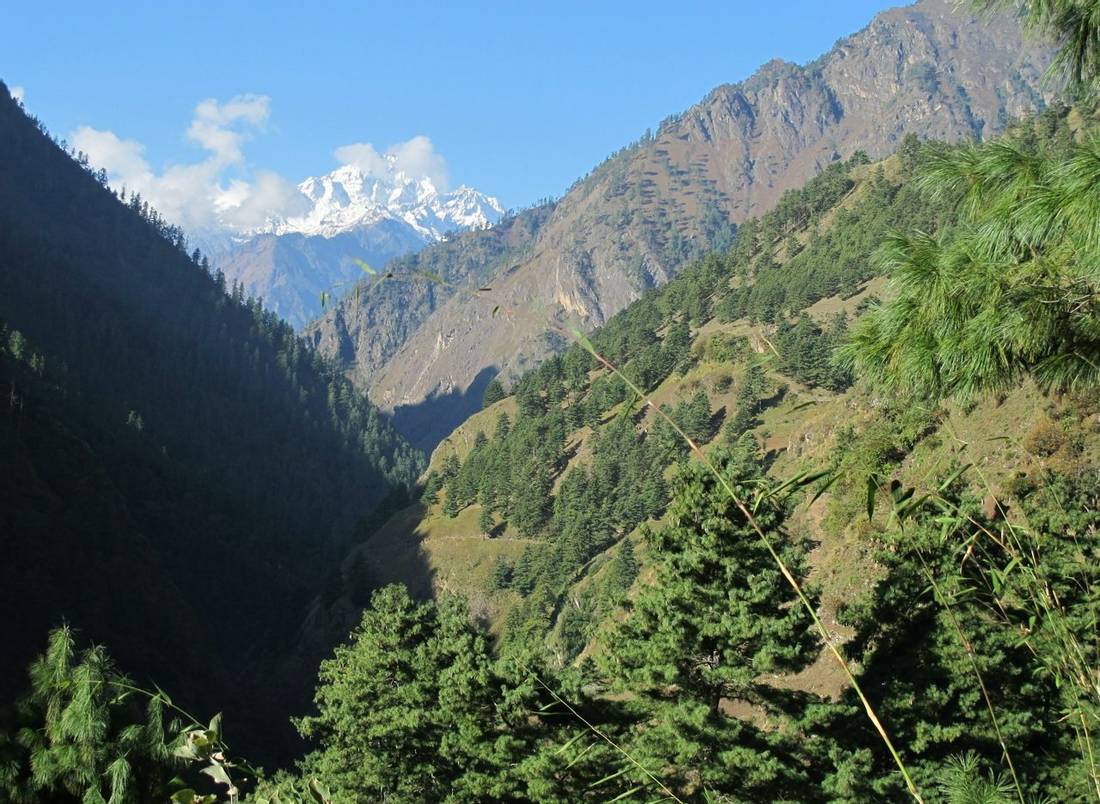
While trekking around Manaslu, you see the spectacular landscape of the Nepal Himalaya. The view from Larkya La is superb of the Himal Chuli, Cheo Himal, and Himlung Himal mountains. The Manaslu trek starts at Jagat village, further up the valley from the town of Arughat. After trekking to Tsum Valley, we rejoin the Manaslu Circuit. From Lho village, we enter the Nupri region inhabited by Tibetan immigrants. Like in Tsum, we see colourful Buddhist prayer flags, mani walls, and monasteries. After Samdo village, we start the approach towards the Larkya La pass at an altitude of 5,215m. The pass day is a challenging day at high altitude , although no previous mountaineering experience is required.
The Manaslu Tsum trek has similar scenery and landscape to the Half Annapurna Circuit to the West. In the Manaslu region, there is now a network of teahouse lodges. The lodges are generally more basic than those for Everest Base Camp or Annapurna Base Camp, although improving every year.
- The gradual ascent profile for this trekking holiday works well for acclimatisation. We organise a longer trek around Manaslu by visiting the Tsum valley.
- We include all meals at the teahouse lodges (breakfast, lunch, afternoon tea, and dinner) while on the trek. Importantly, we clearly define what dishes and drinks we provide so there is no confusion in terms of what is allowed. Given the amount of food and drinks we include, there should be no need to spend any extra money on additional food.
- We are Himalayan trekking specialists having operated trips in Nepal for many years. Roland Hunter has designed the itinerary from his first-hand experience of this trek based on a reconnaissance in April 2026.
- Our AITO Traveller Reviews for Manaslu Circuit with Tsum Valley and also our AITO Traveller Reviews for Manaslu Circuit have a holiday rating of 100%. Based on client feedback we won the 2018 Gold Award as AITO Tour Operator of the Year. Read more about our Testimonials and Awards.
- We review weather forecasts for the Manaslu region throughout the duration of this trek.
- We send a Thuraya satellite phone on our group treks in Nepal. Your leader will have reliable communications for logistics, planning, and group safety.
- We provide the porters with windproof jackets & trousers and shelter. We follow International Porter Protection Group (“IPPG”) guidelines.
- We bring a comprehensive medical aid kit.
- Our team with first-hand knowledge of this trek provides pre-trip support. During high season we have someone from our UK Operations team based in Kathmandu.
Route Map
Itinerary
Flying into Kathmandu on a clear day is in itself an unforgettable experience. The Himalayan peaks are only a short distance north of the capital of Nepal as seen from the plane. After customs, you will pass into the passenger pick-up area outside the building. You will see a Mountain Company signboard. Our representative will be waiting to welcome you to Nepal. After transferring to your hotel we will give you a full trek briefing. The rest of the day will be yours to explore Kathmandu and to make final preparations for the trek. You will hear the Nepalese word for hello ‘Namaste’, you will never forget that word after this holiday.
This is a one-day guided sightseeing tour of the Kathmandu Valley. We visit three out of the seven World Heritage Sites. You start off by visiting Patan Durbar Square. Afterward, you drive to the Buddhist stupa at Boudhanath. The last stop of the day is at the Hindu shrine of Pashupatinath. The tour is likely to finish around 4pm and the rest of the day is free to further explore Kathmandu.
Three major towns in the valley, are Kathmandu, Patan, and Bhaktapur. Each place has great artistic and architectural traditions. Kathmandu is the capital and the largest city in the country. Patan, the second largest separated from Kathmandu by the Bagmati river. Bhaktapur, the third largest, is towards the eastern end of the valley. Its relative isolation is reflected in its slower pace and more medieval atmosphere. In Kathmandu, there is a bustle of activity, especially in the bazaars and markets. While the city has expanded over the last 10 years it is still possible to see traditional buildings and temples.
We leave Kathmandu early in the morning by private four wheel drive vehicle. After exiting the Kathmandu valley we follow the road towards Pokhara called the Prithvi Highway. After about 32km from Kathmandu, we turn off the main road and cross a bridge over the Trishuli River. From this junction it is another 65km to the town of Arughat. This place used to be the starting point for the Manaslu trek although these days the road has been extended up the Budhi Gandaki valley.
Over the years we have driven further northwards given the improving condition of the road. After our reconnaissance trek in April 2026 we decided to drive up to Jagat (whereas in 2025 we stopped at Maccha Khola). There are limited options for alternative hiking trails away from the jeep track so it makes sense to drive as far as it is safe to do so. After the busy market town of Arughat, the road is no longer hard-topped. It is likely to be quite dusty so it is a good idea to bring a buff or scarf along with you. For the first night of the Manaslu Circuit & Tsum Valley trek, we stay at one of the tea houses in the Gurung village of Jagat.
Important Transport Note: The drive from Maccha Khola to Jagat requires a 4WD vehicle and is highly dependent on local weather. During periods of heavy rain, this unpaved road is susceptible to landslides and rockfalls. While there is a strong probability we will be able to drive to Jagat safely, our team will assess the road conditions on the day. If driving is deemed unsafe or blocked by landslides, the trekking portion of our journey will commence from Maccha Khola instead. This adjustment would result in a single-night stay in Samagaon. Our standard itinerary for Manaslu Circuit & Tsum Valley trek has been designed with a robust acclimatisation schedule, meaning in this scenario we have sufficient flexibility to maintain a safe ascent profile.
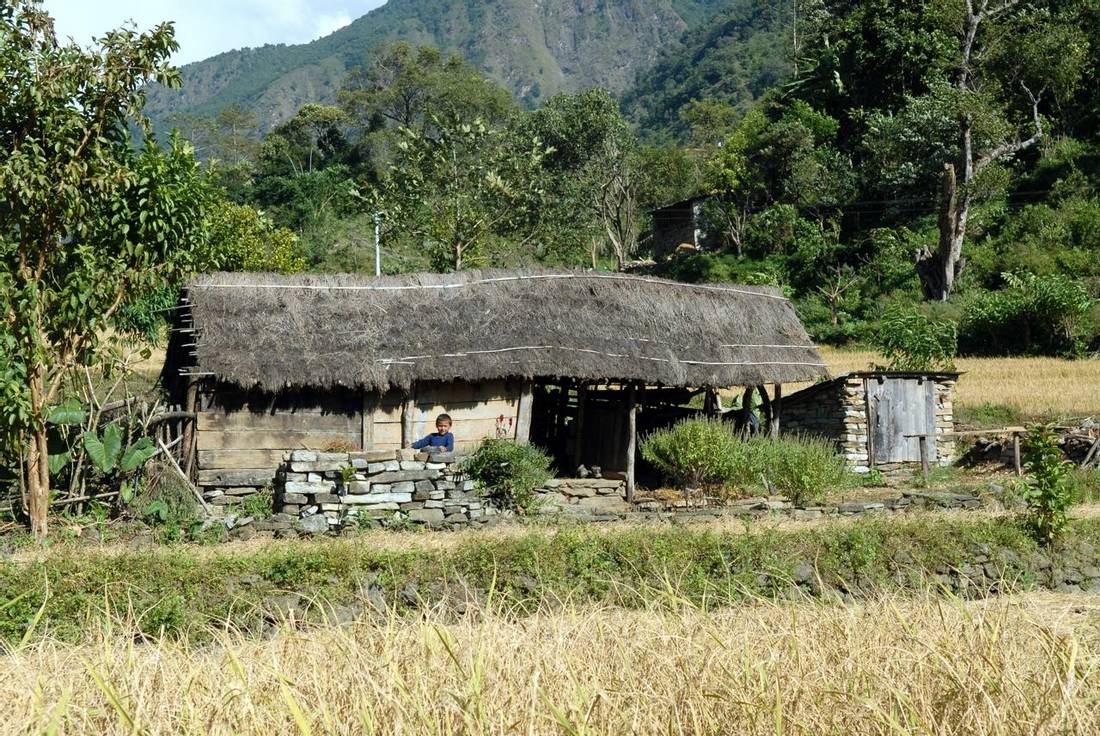
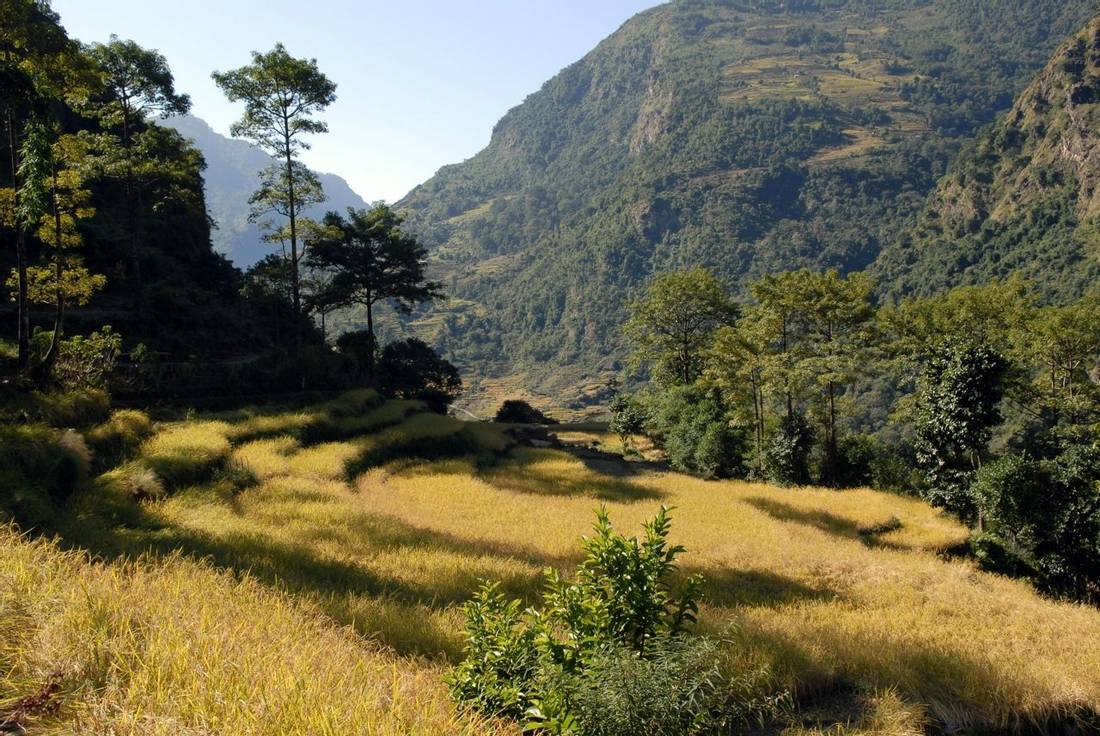
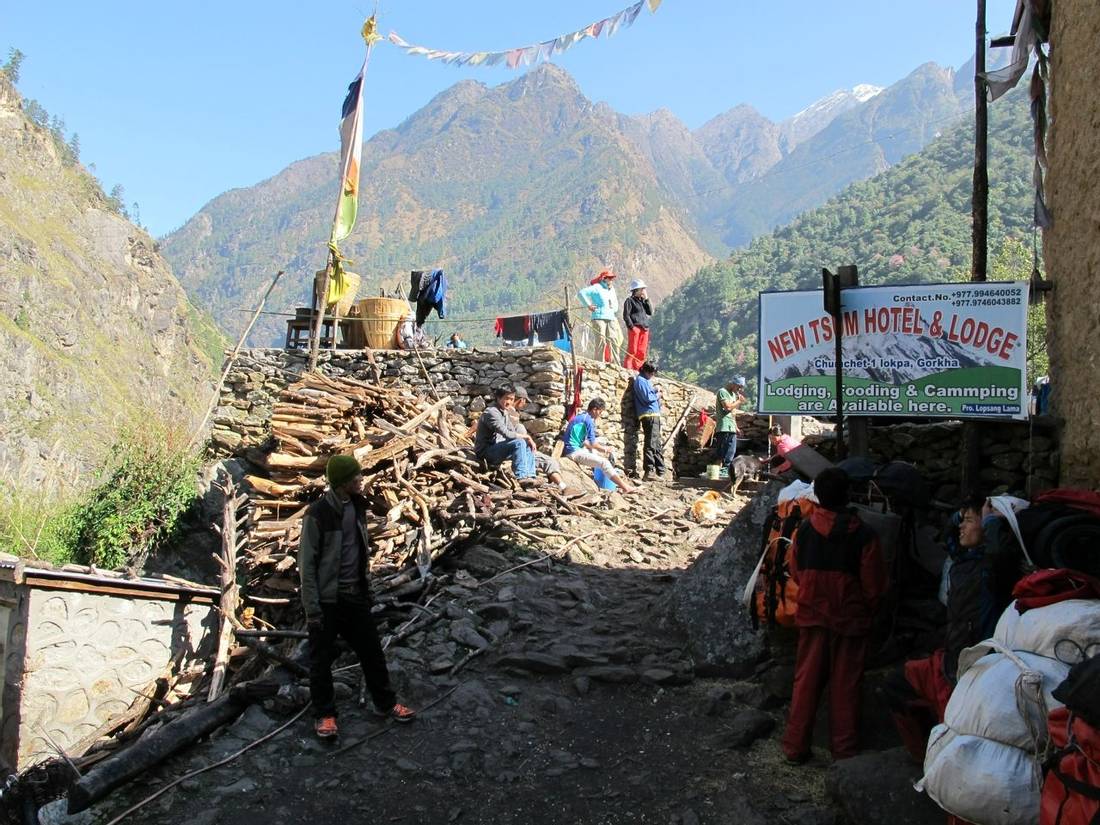
The trek begins from the village of Jagat. After checking through the restricted area permit checkpoint, you will follow the Budhi Gandaki River. The trail gently ascends through a landscape of terraced fields growing corn, millet, and potatoes, leading you to the small settlement of Salleri, which rewards you with your first stunning views of Sringi Himal (7,187m). From Salleri, the trail descends briefly to Sirdibas, a traditional Buddhist village adorned with its first sights of local chortens. You will cross a long, suspension bridge over the Budhi Gandaki to reach Philim (1,590m), a large, prosperous Gurung village. Philim serves as a great spot to take a break and soak in the views of the surrounding cascading waterfalls split across the valley walls.
Beyond Philim, the gorge narrows dramatically. You will trek through lush, dense forests of bamboo and rhododendron, keeping an eye out for the local grey langur monkeys. The trail turns north, navigating a cliffside path until you reach a junction in the trail after Ekle Bhatti. We take the right-hand fork, dipping down towards the river and entering the deeply spiritual Tsum Valley. A sharp, steep final climb through wild pine and blue pine forests brings you out of the deep gorge and up to Lhokpa (2,240m). Lhokpa is the first village of the Tsum Valley. It is a remote place with a view of the towering Ganesh Himal range.
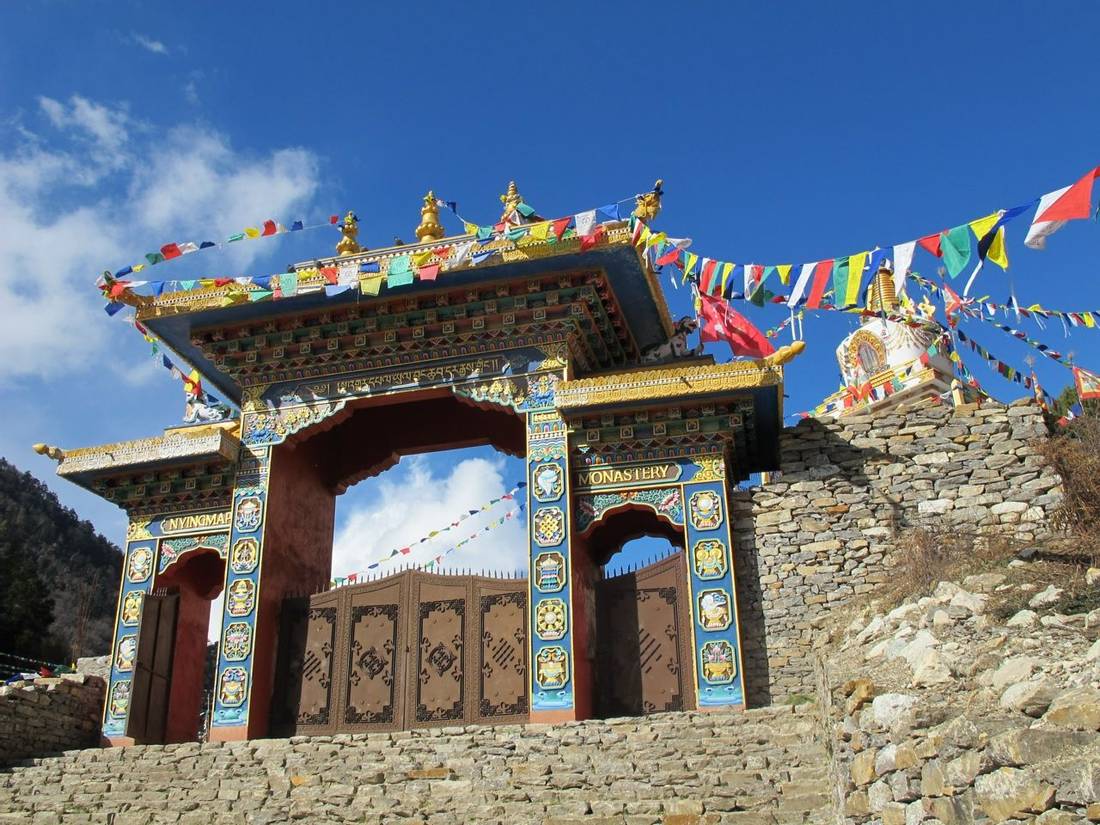
Leaving Lhokpa, the official entry point or "gateway" into the restricted, mystical Tsum Valley, you will venture into a sacred Tibetan Buddhist enclave. The trail begins with a descent through a lush subtropical forest down toward the roaring Siyar Khola (River). After crossing a suspension bridge, the real work begins. The route demands a steady, undulating climb through dense forests of pine, rhododendron, and bamboo, clinging to the steep gorge walls. One of the highlights of this section is navigating the dramatic, engineered metal paths and cantilevers bolted directly into the sheer face of the rocky cliffs. Suspended high above the rushing river, walking along these sturdy steel walkways offers a bird's-eye view of the rugged canyon below and showcases the incredible feat of local trail engineering.
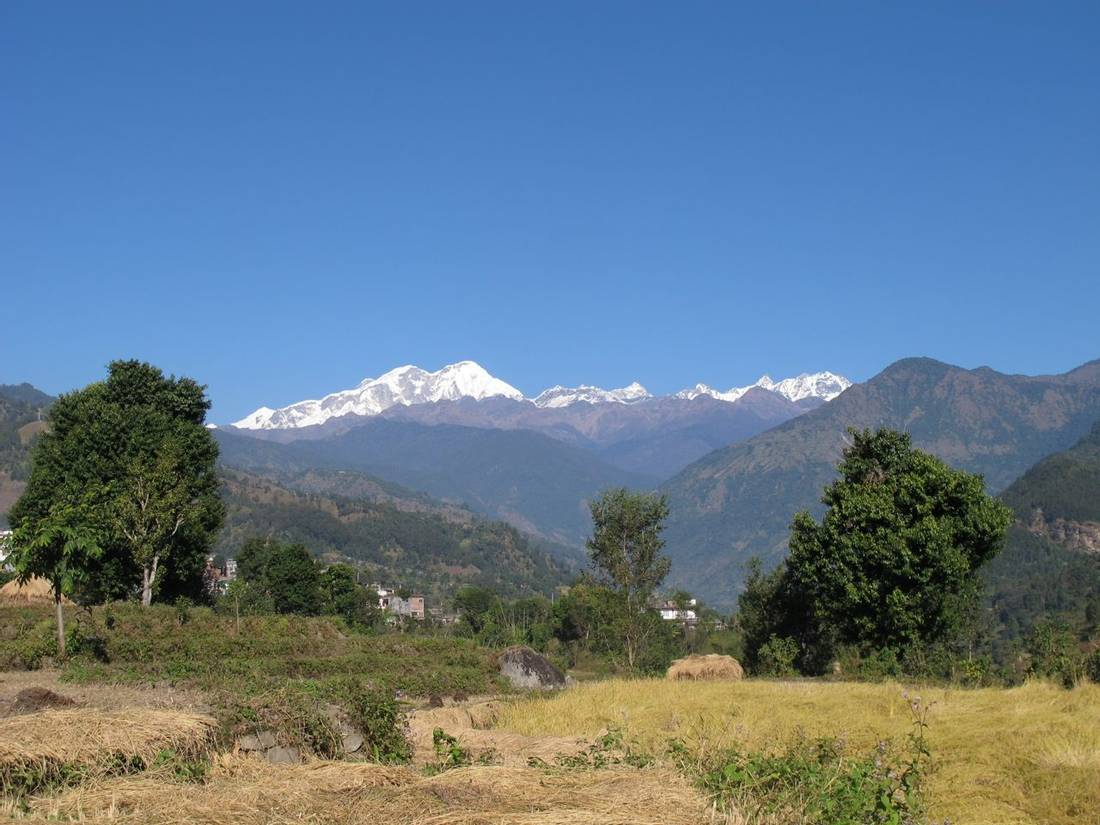
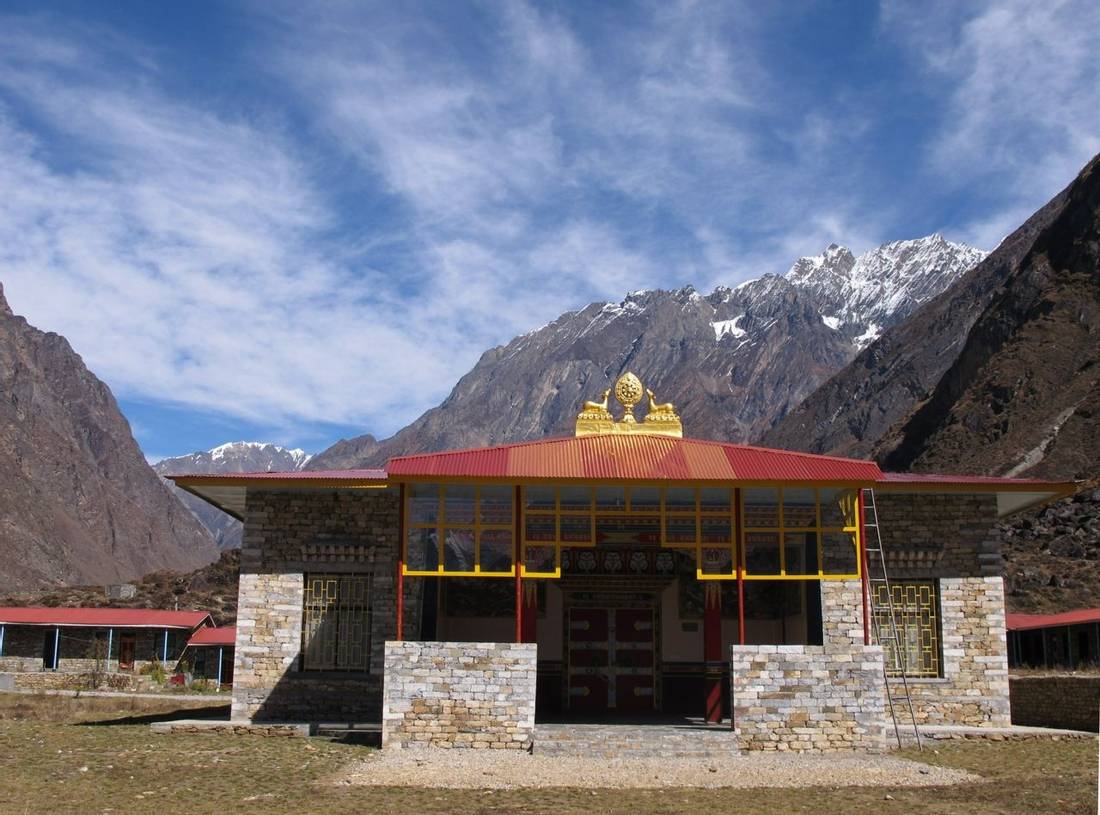
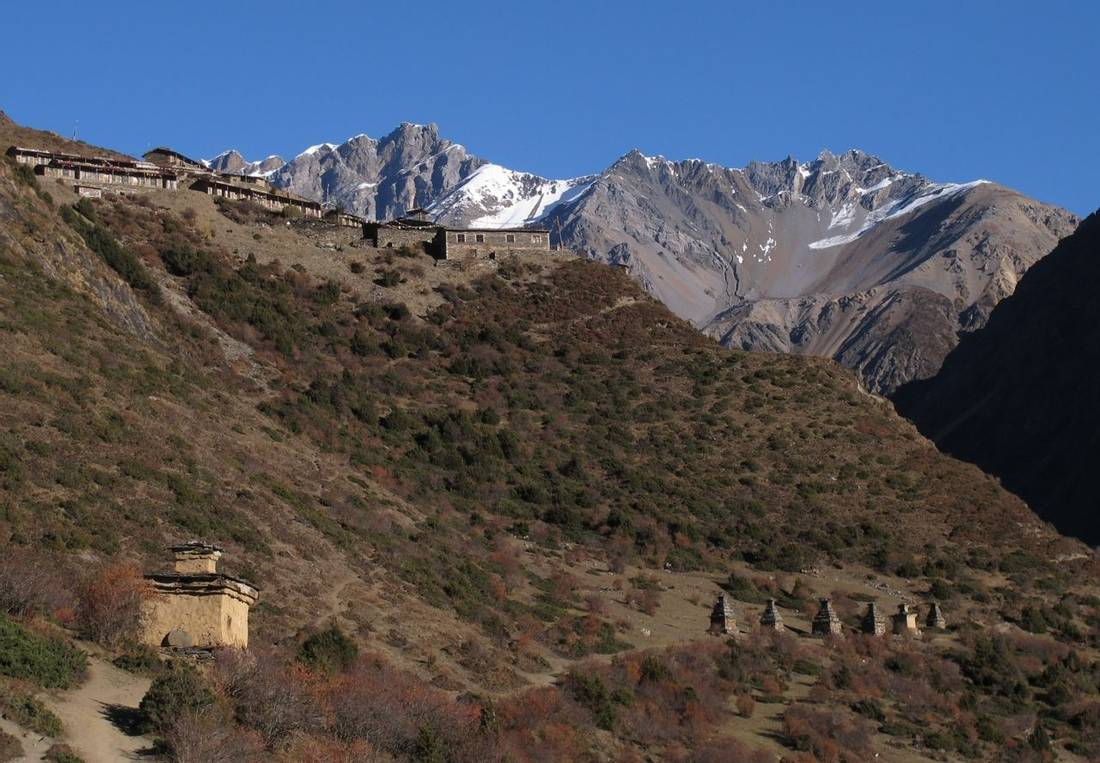
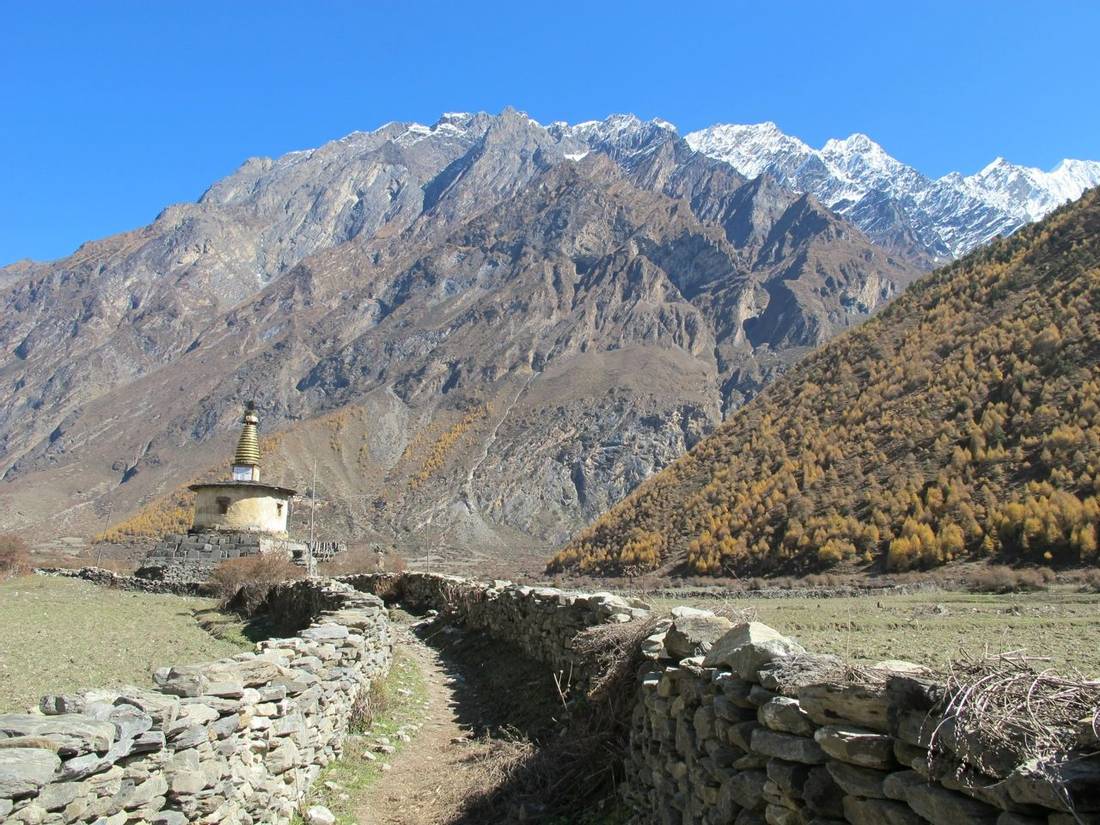
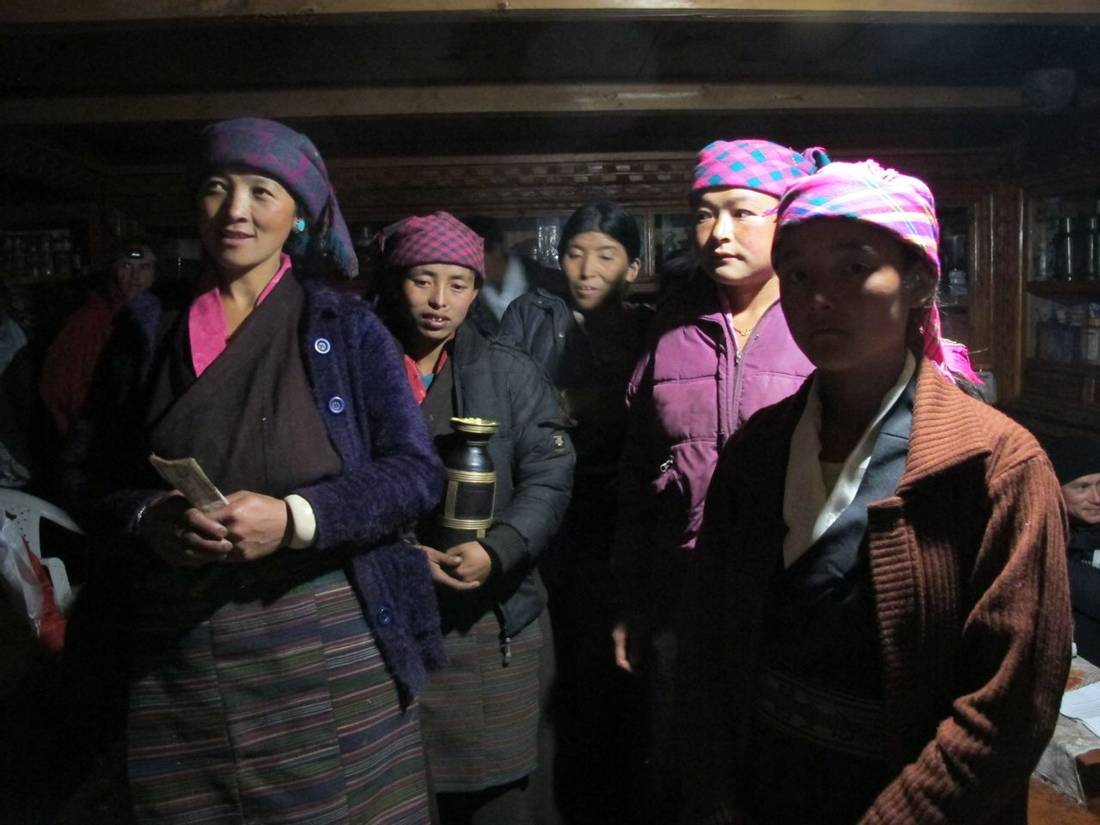
As you ascend out of the dense forest, the valley begins to open up, revealing dramatic, jagged cliffs and your first truly breathtaking glimpses of the snow-capped Baudha Himal and Ganesh Himal VI. The final stretch rewards you with a gentle walk into Chumling (2,386m), also known as Lower Tsum. Chumling is a classic, stone-built village steeped in authentic Tibetan culture. You will be greeted by the sight of ancient chortens, mani (prayer) walls, and fluttering prayer flags.
Leaving the lower village of Chumling behind, today’s journey marks your official transition into the Upper Tsum Valley, a spiritual, culturally distinct region heavily influenced by Tibetan Buddhism. This section of the combined Manaslu Circuit and Tsum Valley trek trades the dense bamboo and pine forests for wider valleys and sweeping mountain vistas. The day begins with a gentle descent down to the suspension bridge spanning the Siyar Khola (the main river draining the Tsum Valley). Once across, you will begin a steady, sustained climb along the north-facing slopes of the valley. As you ascend, the jagged, snow-capped peaks of the Ganesh Himal and Boudha Himal frame the horizon behind you.
The trail winds through a series of small, traditional stone hamlets, including Tanju and Kowo. Keep an eye out for ancient mani walls and artistic kani (gateways) that signal your entry into a sacred valley where the slaughter of animals is strictly forbidden by local religious decree. The final stretch rewards you with an opening landscape as the valley floor widens into wide alpine pastures and potato fields, culminating in your arrival at Chhokang Paro (also spelled Chhekampar). This is a twin-settlement settlement characterised by traditional flat-roofed stone houses, hospitable local Tsumba people, and clear, striking views of Hiunchuli and Ganesh Himal.
The day begins with a gentle hike through the twin settlements of Chhokang and Paro, which sit on a broad, flat shelf. You will pass through scenic, stone-fenced fields where locals cultivate barley, buckwheat, and potatoes. As you head further north, you will reach the village of Ngakyu Leru and soon see on the cliffs above Piren Phu (Pigeon Cave), also known as Milarepa’s Cave. This sacred monastery is where the famous Tibetan yogi and poet, Milarepa, is said to have meditated..
The trail continues with a steady incline through the upper valley heading north toward the Tibetan border. You will cross a suspension bridge over the rushing Shiyar Khola. The valley grows slightly narrower and more rugged as you gain altitude, and the air noticeably cools down. You will pass the famous Rachen Gompa, which is a large nunnery nestled against the mountainside. Continuing along the western bank of the river, a final gentle push brings you into Chhule, a traditional stone-house village. Chhule sits just a short 15-minute walk across the river from its "twin" village, Nile.
This day is the spiritual and geographical highlight of your journey into the sacred, Tibetan-influenced Tsum Valley. You will ascend to the highest and most remote outpost of the valley—the historic Mu Gompa (3,700m)—before tracing your steps back down the valley to Chhokang Paro (3,030m). Leaving the traditional stone houses of Chhule, you will follow the westward bank of the Shyiar Khola river. The landscape quickly shifts into a dramatic, arid, Trans-Himalayan terrain of the Tibetan plateau. The trail climbs steadily past yak pastures and ancient mani walls.
As you near Mu Gompa, the mountain wilderness opens up to reveal panoramic views of the Ganesh Himal range and the peaks bordering Tibet. Established in 1895, Mu Gompa is the largest and most remote monastery in the region, housing invaluable Buddhist relics, religious texts, and a life-sized statue of Avalokiteshvara. After taking time to explore the monastery, soak in the ambiance, and perhaps enjoy a cup of tea, you will turn south to begin your descent which backtracks down the valley.. You will pass back through Chhule, taking in the before arriving at the wide, flat valley floor where Chhokang Paro is located.
This section of the trek marks your descent from the open, Tibetan-influenced plains of Upper Tsum back down into the lush, narrow gorges of Lower Tsum. Leaving the twin settlements of Chhokang and Paro, you will retrace your steps down the valley, bidding farewell to the dramatic views of the Ganesh Himal range. The trail winds past traditional stone villages, mani walls, and chortens before plunging into the cooler, shaded forests of pine, rhododendron, and giant bamboo. You will cross the roaring Shiyar Khola via suspension bridges and navigate a mix of long descents and short, sharp counter-climbs before arriving at the narrow gateway village of Lhokpa, ready to re-join the main Manaslu Circuit trail the following day.
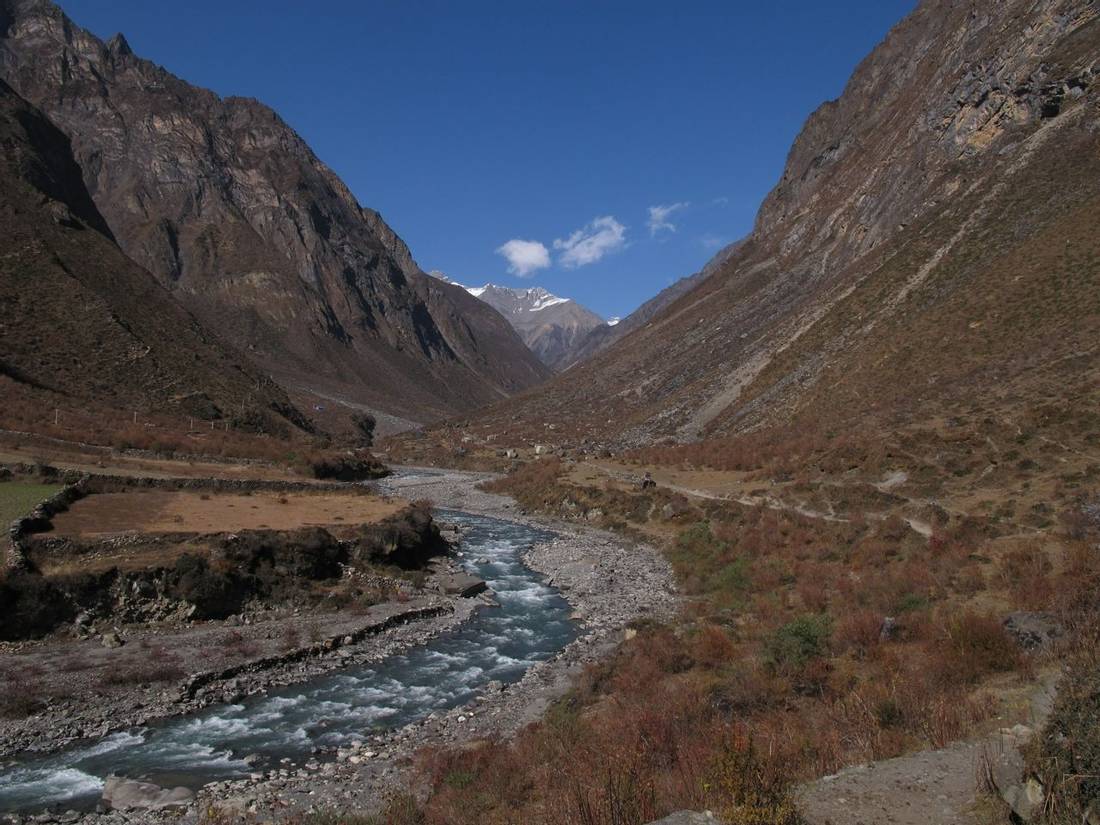
The day begins in Lhokpa, the southernmost village of the Tsum Valley. The trail starts with an undulating walk through a dense bamboo, pine, and rhododendron forests, but quickly turns into a rocky descent into the narrow wilderness of the Siyar Khola gorge. You will drop down sharply to the confluence where the Siyar Khola meets the Budhi Gandaki River. Upon crossing the suspension bridge near Nyak Phedi, you rejoin the main Manaslu Circuit trail. The landscape instantly shifts as you enter a dramatic, narrow river canyon. The trail hugs the cliffside, stepping over stone staircases and undulating sharply. You will pass through Deng (1,860m), a popular lunch spot.
After lunch, you continue upstream, crossing the Budhi Gandaki multiple times over suspension bridges as the valley begins to widen slightly. You will pass through the small settlement of Rana. The final leg of the day follows a steep zigzagging climb away from the riverbed up to the elevated plateau where Prok sits. Your hard work is rewarded as you top out onto a vibrant agricultural shelf. Prok is a beautifully preserved village untouched by modern commercialism, offering stunning views of Shringi Himal and a glimpse into traditional Buddhist highland life.
In practice very few other trekkers walk up to Kal Tal lake and as a result it is one of the most pristine, off-the-beaten-path side trips in the Manaslu region. We recently added this hike into our itinerary following Roland Hunter’s reconnaissance trek in April 2026. Kal Tal is a sacred high-altitude alpine lake and is an excellent, albeit physically demanding, acclimatisation hike before you push higher up the Nubri Valley and over the Larkya La Pass.
Your day begins early in the traditional, culturally rich village of Prok. After breakfast at your teahouse, you’ll pack a daypack with plenty of water, warm layers, and a packed lunch (as there are no teahouses or facilities on the way to or at the lake). Leaving the stone houses of Prok behind, the trail begins a steep zigzag ascent. You walk into a dense forest of oak, pine, and vibrant rhododendrons (which burst into deep reds and pinks if you are trekking in the spring). As you gain elevation, the tree line begins to thin, opening up views of Shringi Himal and Ganesh Himal across the valley.
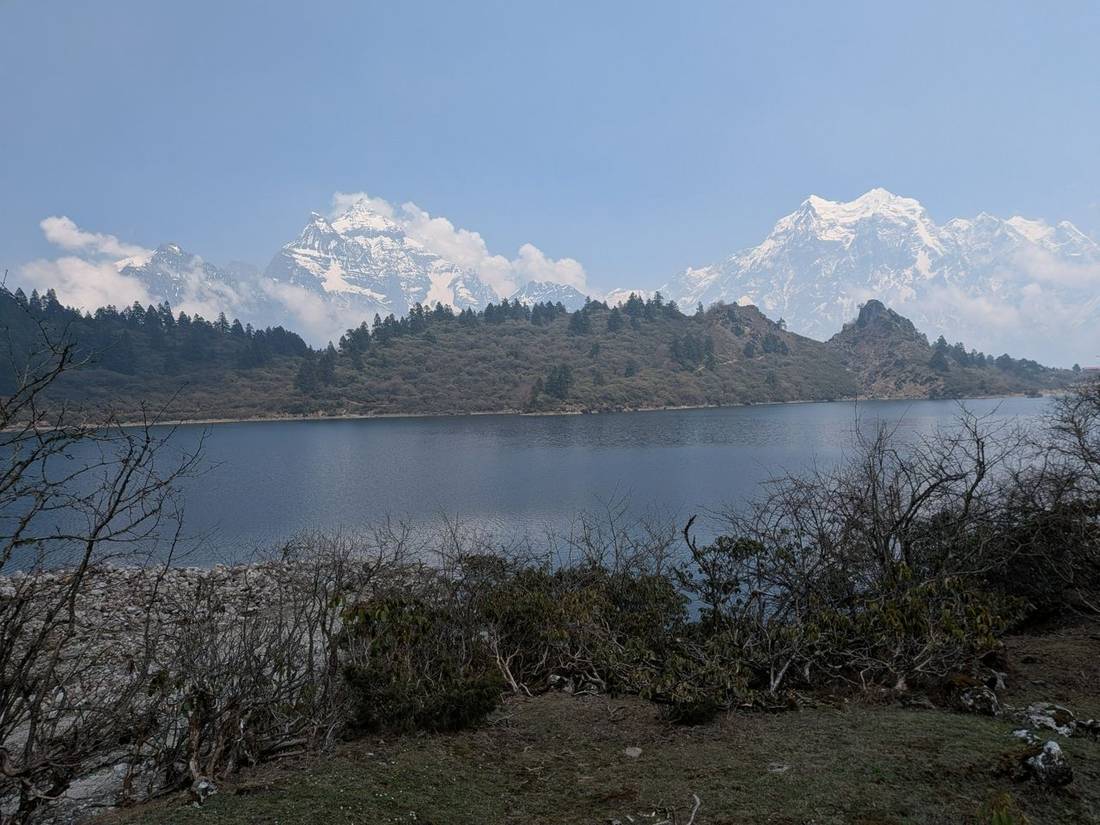
After about 4 to 5 hours of steady, uphill trekking, the terrain levels out into a dramatic alpine bowl. Tucked away beneath the towering peaks lies Kal Tal. On a clear, calm day, the deep, dark waters of the lake perfectly mirror the towering massifs of Mount Manaslu and Buddha Himal. The lake holds deep spiritual significance for the local Buddhist communities. You will explore the lakeside, where you'll find the artistic Kal Chokkang Gumba (monastery), eight joint stupas, and fluttering prayer flags. Take your time to eat your packed lunch, enjoy the profound mountain silence, and absorb the powerful atmosphere. Because you will descend 1,220m back down to Prok, trekking poles are highly recommended. As you re-enter the forest and descend into the lower valley, the air grows warmer. You will arrive back in Prok by mid afternoon. After a challenging but deeply rewarding day, you will enjoy a second night of warm hospitality in the village, now significantly better acclimatised for the rest of your Manaslu and Tsum Valley adventure.
After breakfast, you leave Prok village and its extensive fields on a high plateau, on a trail that descends and contours before rejoining the main Manaslu trekking trail. The trail levels out briefly as you arrive in Namrung (2,630m), a popular hub featuring a police permit checkpoint and a cluster of lodges. Beyond Namrung, the landscape shifts beautifully. The gorge opens into a broader glacial valley. As you climb toward Lihi, look back to catch stunning, sharp silhouettes of Siringi Himal and Ganesh Himal. The architecture changes with houses being constructed using dry stone, and roofs are weighed down by heavy timber to withstand high mountain winds.
Leaving Lihi, you cross a scenic stream fed by the Lidanda Glacier. The trail hugs the valley wall, leading you past intricately carved Mani walls. As you arrive in Sho, the valley widens. On a clear afternoon, you will be rewarded with a view of Mount Manaslu (8,163m) and Naike Peak. Sho (2,960m), is an ancient Tibetan-style settlement and is much quieter than the larger trekking hubs of Lho or Samagaon, making it an ideal, authentic place to experience local Bhutia culture.
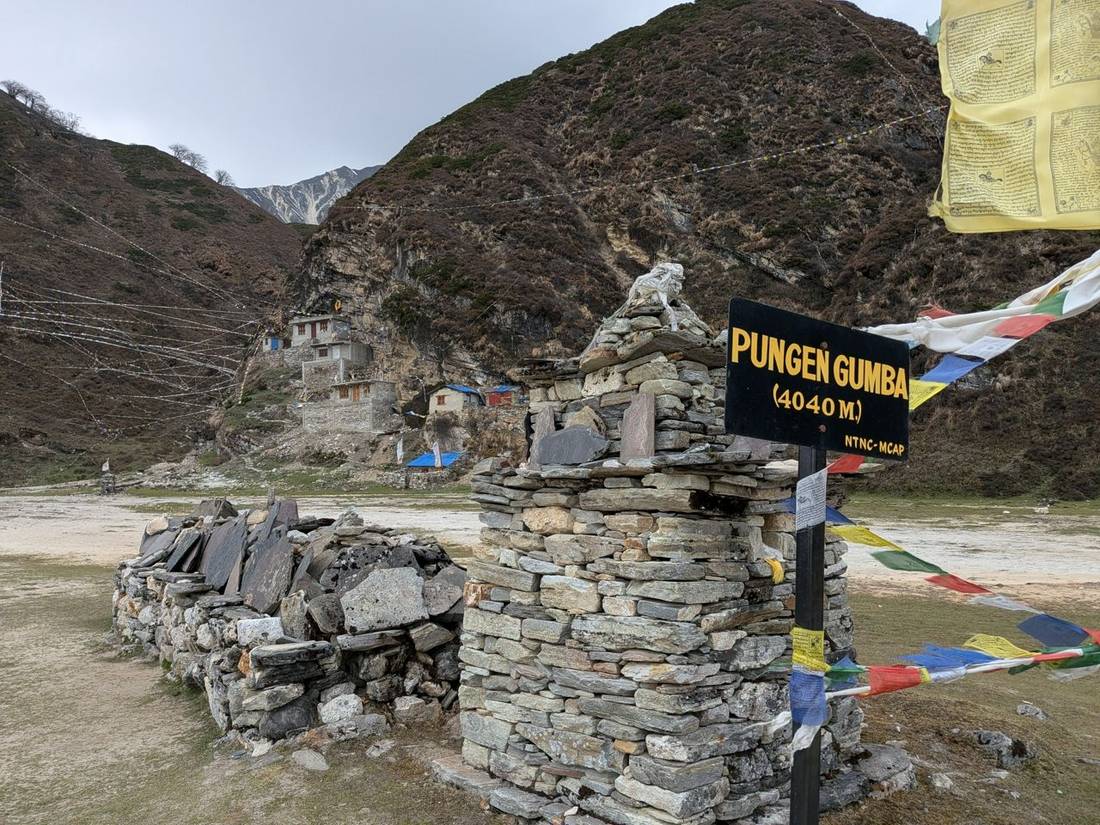
This section of the Manaslu Circuit with Tsum Valley Trek marks your entry into the Nubri Valley. While many standard itineraries rush directly along the valley floor to Samagaon, taking the side trip detour via Pungyen Gompa (4,000m) adds a lot in terms of scenic and cultural interest. Pungyen Gompa itself is an ancient, deeply spiritual Tibetan Buddhist monastery that was tragically destroyed by an avalanche in the 1950s and later rebuilt. This is also very effective for acclimatising your body to the high altitude following the “climb high, sleep low” approach.
After leaving the village of Sho, you follow the main trekking trail to Shyala village (3,400m). From there, you will turn left onto the steep, winding path that climbs toward the Pungyen glacier. The trail transitions from lush forest to open alpine meadows and rugged yak pasture, As you crest the high plateau, the landscape completely opens up into a glacial valley. Directly ahead of you sits Pungyen Gompa (4,000m), dwarfed by the sheer, intimidating south face of Mount Manaslu. Take your time to explore the small, peaceful monastery buildings, interact with any residing monks, and eat a packed lunch surrounded by one of the most dramatic mountain amphitheaters in the Himalayas.
Leaving the sacred plateau behind, you will retrace your steps down the grassy moraine slopes. We take a different trail that descends towards Samagaon rather than going back to Shyala. Once you rejoin the main valley trail, you'll make the final, gentle approach into Samagaon (3,450m). Nestled in a wide valley basin, this large, flat village is rich with fluttering chortens, low-slung stone homes, and local yak herders—making it the perfect base for your well-deserved rest and acclimatisation days ahead.
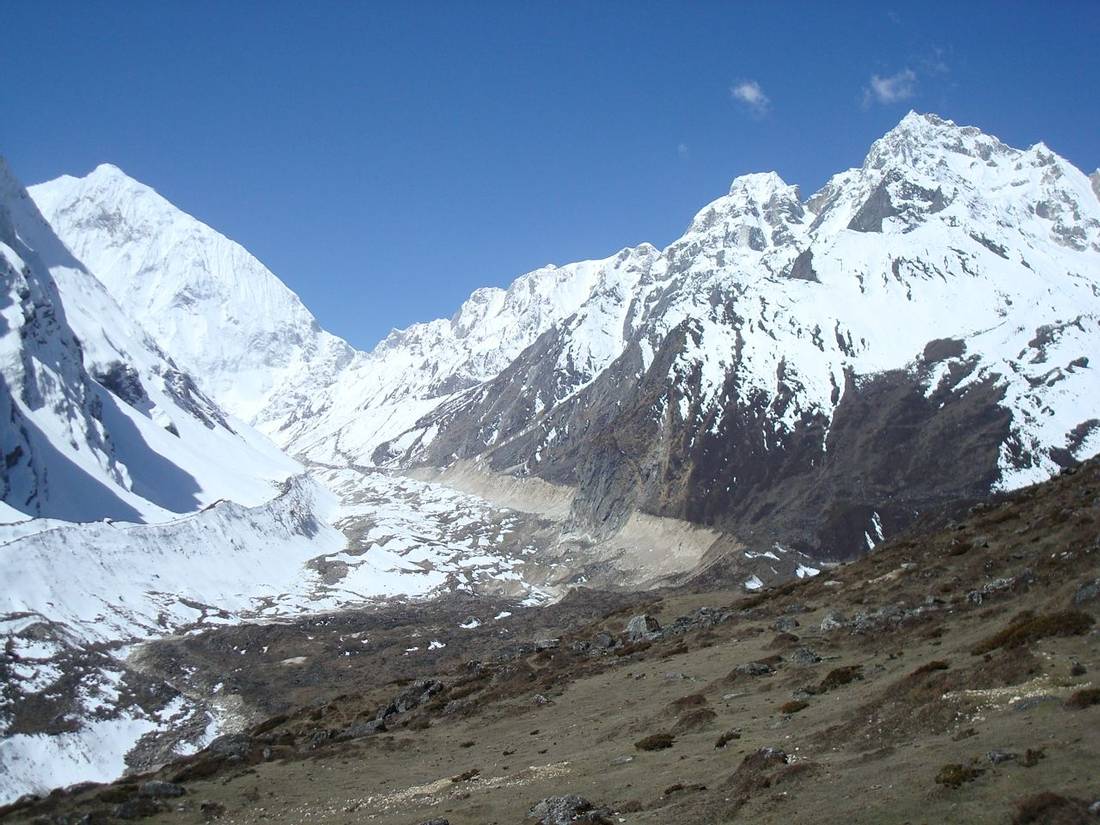
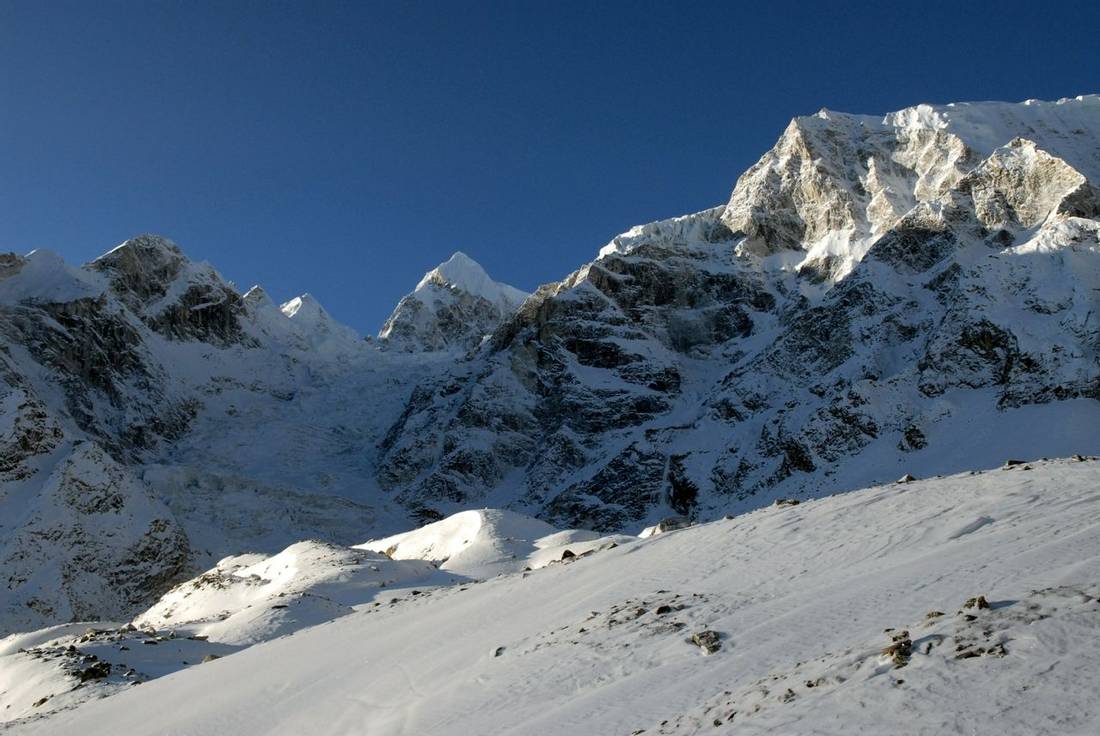
We spend two nights at Samagaon to help acclimatise to the high altitude. Your objective for the day is a hike to the halfway point of the trail leading to Manaslu Base Camp. Leaving Samagaon behind, you will initially skirt the edges of the turquoise Birendra Tal (Glacial Lake). From there, the trail begins its steep ascent through alpine meadows and juniper bushes. As you reach the halfway mark (roughly 4,100m), the terrain opens up dramatically. You are rewarded with spectacular views of the massive Manaslu Glacier tumbling down from the heights, alongside the intimidating, jagged walls of Mount Manaslu (8,163m)—the world’s eighth-highest peak—and its neighbouring summit, Naike Peak.
Our suggestion is not to push all the way to Manaslu Base Camp (4,800m), although this may be possible if anyone feels motivated to do it. There is a tea shop at an altitude of 4,100m which is about halfway and in practice this has the best views. Above this point, the trail is a bit loose plus at certain times of the year it can be snowy or icy so going higher depends to an extent on conditions. Walking the whole way to Base Camp is a very long day and for most people it would be going too high in altitude too soon. We don't want to risk you overdoing it and burning out before the pass. At this high altitude, rest and recovery is very important, and after the morning hike, you will have the afternoon in Samagaon to relax (where there are a few nice coffee shops these days).
Important Note: If road conditions prevent driving to Jagat and force an extra walking day at the start of the trek, our time in Samagaon will be reduced from two nights to one night. If this contingency occurs, the schedule for the Samagaon and Samdo will adjust as follows:
- Day 14: the dedicated day for the Manaslu Base Camp (MBC) acclimatisation walk is cut.
- Day 15: because the trek from Samagaon to Samdo is short (approx. 3 hours), we will combine the MBC viewpoint with the hike to Samdo.
Today’s hike is relatively short and serves as an ideal "transit day" to help your body adapt to the thinning air. This stage marks your entry into the high-altitude, alpine zone of the upper Manaslu region. Leaving the sprawling village of Samagaon behind, the trail heads north, parallel to the thinning Budhi Gandaki River. You are walking through alpine meadows, dwarf juniper bushes, and glacial moraines. As you gain elevation, the valley opens up widely. To your left, you will get incredible, shifting angles of Mount Manaslu. The trail eventually drops slightly down to the riverbed to cross a wooden bridge over the Budhi Gandaki. After crossing the river, you will pass the ruins of Lela Kharka. From here, the trail climbs more steeply up onto a shelf above the river. You will contour around a ridge before a final short, steep push brings you into the stone-walled, flat-roofed village of Samdo. Samdo, is a settlement primarily inhabited by Tibetan refugees who established the village in the 1950s. It stands as the last permanently inhabited village before you tackle the high Larkya La Pass.
To safely prepare your body for the Larkya La Pass (5,215m) ahead, you will put into practice the golden rule of high-altitude mountaineering: "Climb high, sleep low." Leaving the high-altitude village of Samdo after an early breakfast, you will embark on another side-trip toward the Rui La (Pass), a historic trade route on the border between Nepal and Tibet (China) at approximately 5,000m.
The trail winds northeast out of Samdo, tracking along through alpine meadows and rocky moraines. The majestic vistas of the Manaslu region unfold in a stunning 360-degree panorama. Keep an eye out for the Himalayan blue sheep along the slopes. Reaching the top of the pass, you will be rewarded with a view of the vast, arid Tibetan plateau stretching endlessly into the north, contrasted sharply against the jagged, snow-capped giants of the Himalayas to the south. You will see prayer flags fluttering on the border. After enjoying the view for a while, you will retrace your steps back down to the comfort of your teahouse in Samdo.
If you are looking for an alternative to the long haul up to the Rui La border, Samdo offers a couple of fantastic options. Depending on your energy levels, how your body is coping with the altitude, and whether you want a more relaxed cultural day, you can choose from these alternative options:
Option 1: If your primary goal is high-altitude training for the Larkya La pass, walking up Samdo Ri (the peak directly towering over the village) is also a good option. It is a steep, demanding ridge hike, but it requires less horizontal distance than the Tibetan border walk.
- You will climb directly up the slopes behind the village. The higher you go, the more dramatic the view becomes. From the viewpoint or the summit ridges, you get an unparalleled, front-row seat to the massive north face of Mt. Manaslu (8,163m), Samdo Peak, Rani Peak, and the sweeping glacier below.
- Walking Time: 4 to 5 hours (round trip)
- Distance: Approx. 5 km – 6 km total return
- Cumulative Ascent/Descent: +/- 600m to 800m (depending on how high up the ridge you go;
Option 2: Because you just completed the Tsum Valley extension before arriving here, your body has already spent significant time trekking and sleeping at high altitudes. You might actually be well-acclimatised already and benefit from a proper rest day.
- Samdo is a fascinating village and you can spend the day wandering around the village, watching the locals weave yak wool, visiting the small local monastery, and drinking cups of tea in a teahouse is a completely valid—and culturally enriching—way to spend your day.
- Walking Time: 1 to 2 hours of casual strolling
- Distance: 1 km – 2 km
- Cumulative Ascent/Descent: Minimal (+/- 50m)
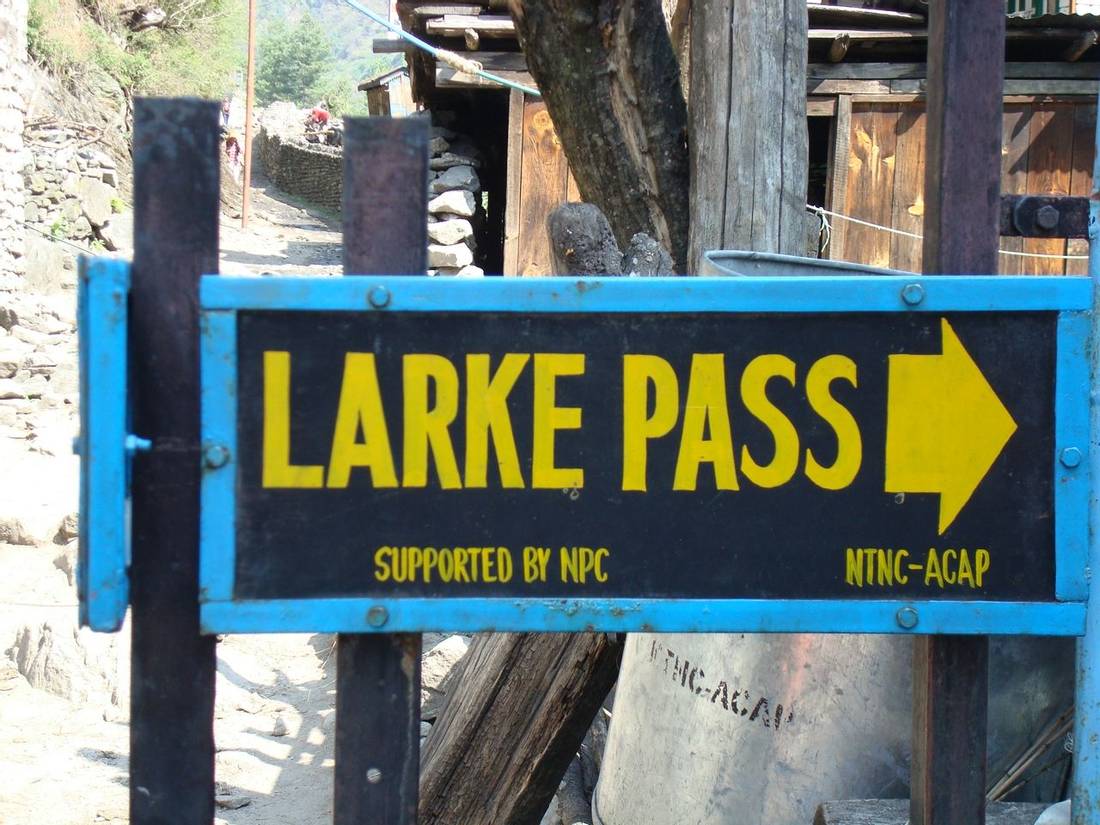
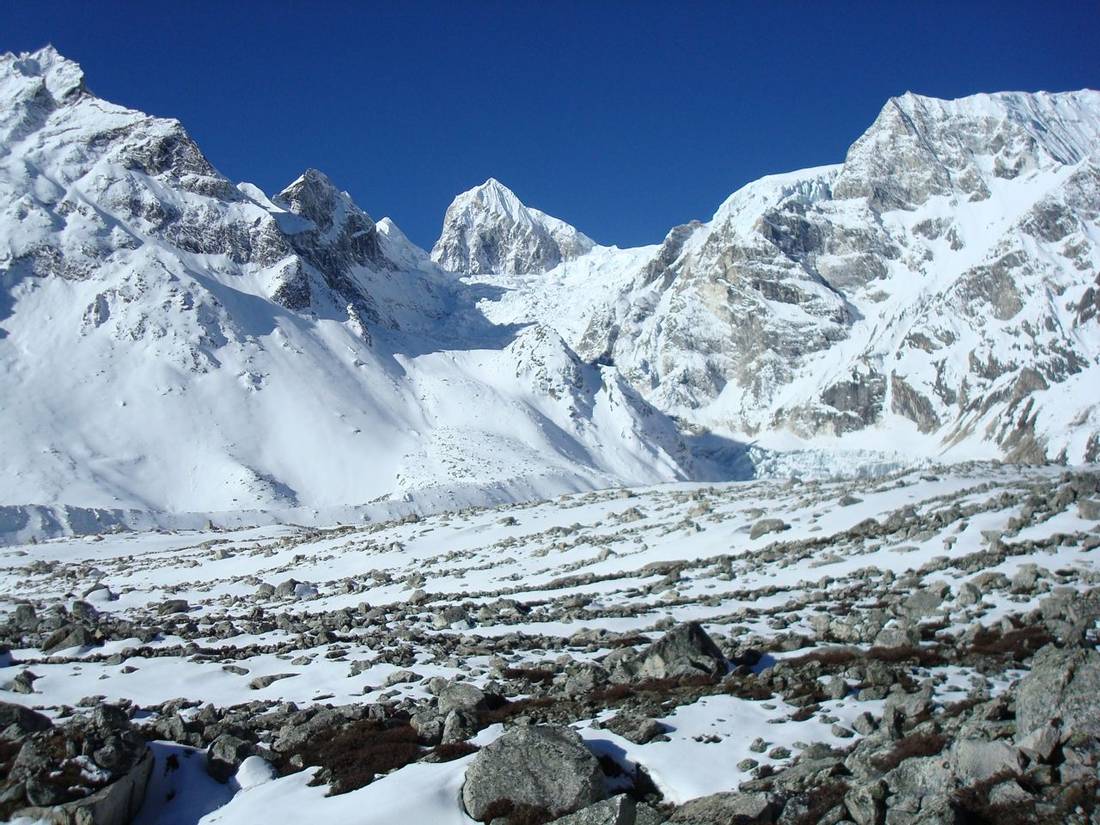
This is a short walk to the highest lodges at Dharamsala (also known as Larkya Phedi) before crossing the Larkya La Pass tomorrow morning. The trail takes you past the remains of the historic Larke Bazar, an old seasonal Tibetan trading market, before crossing the wooden bridges over the nascent Budhi Gandaki River. As you ascend alongside the moraines of the Larkya Glacier, the dramatic north face of Mount Manaslu, Samdo Himal, and Larke Peak can be seen. The day ends early at the basic lodge settlement of Dharamsala, leaving you the afternoon to rest, hydrate, and mentally prepare for crossing Larkya La Pass (5,106m) tomorrow morning.
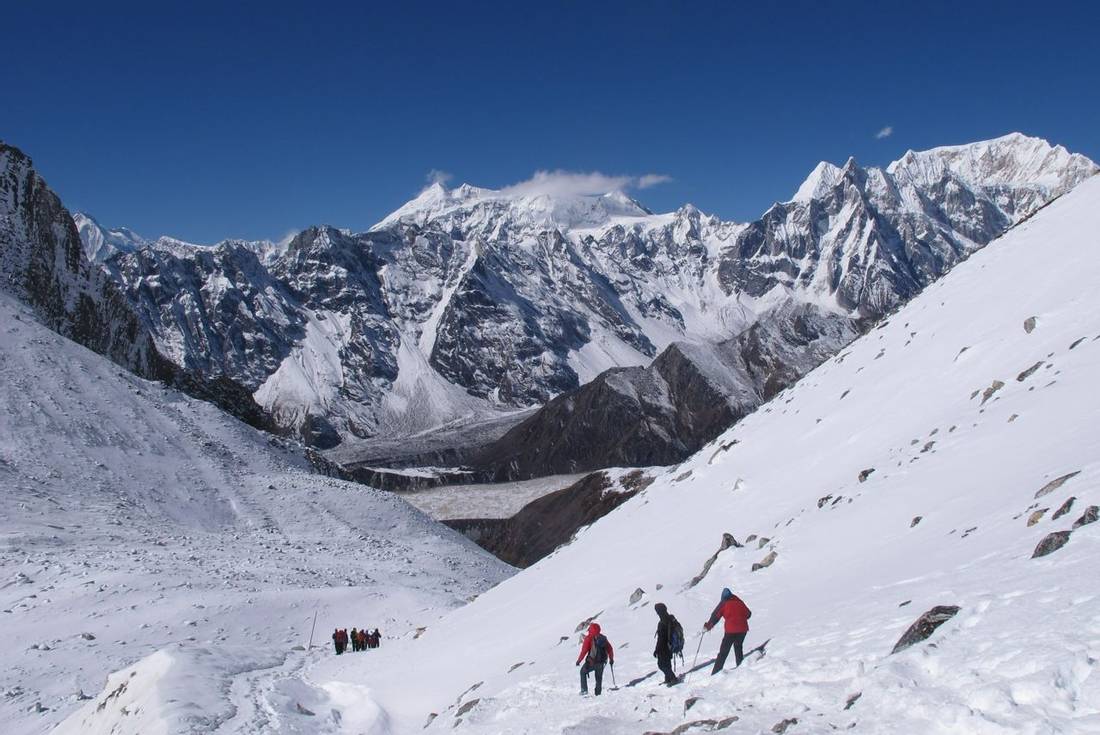
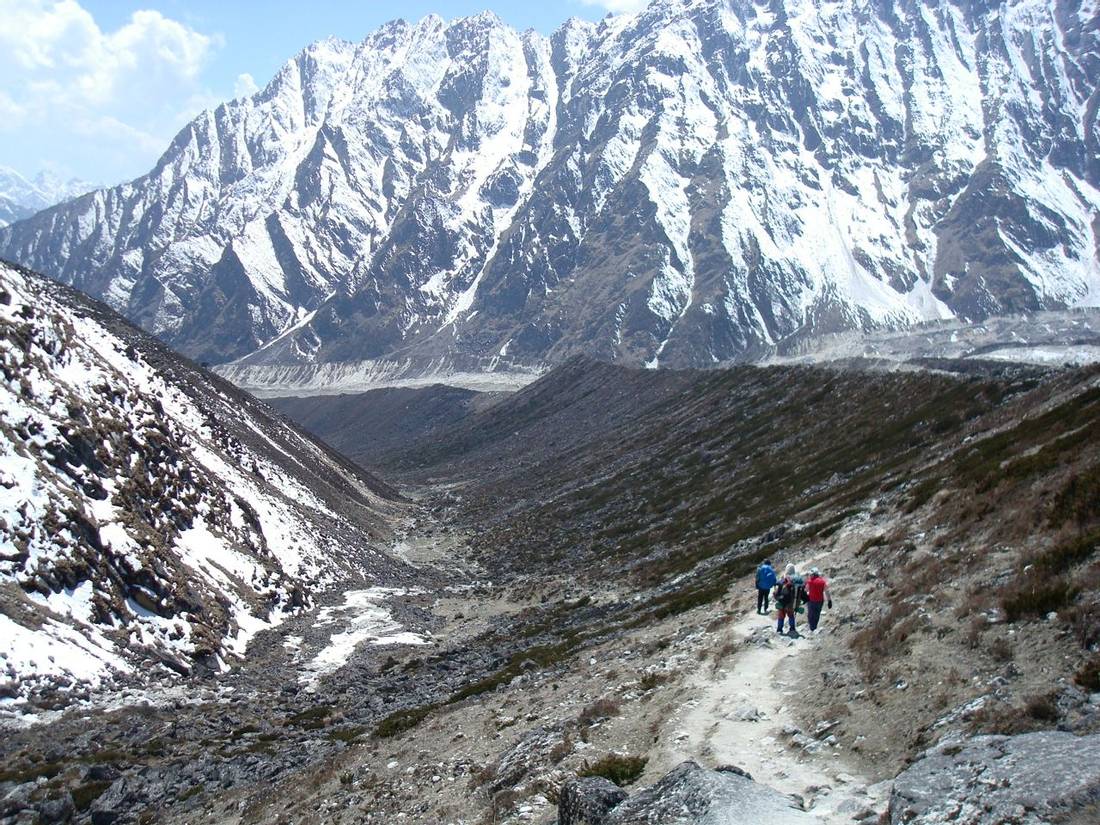
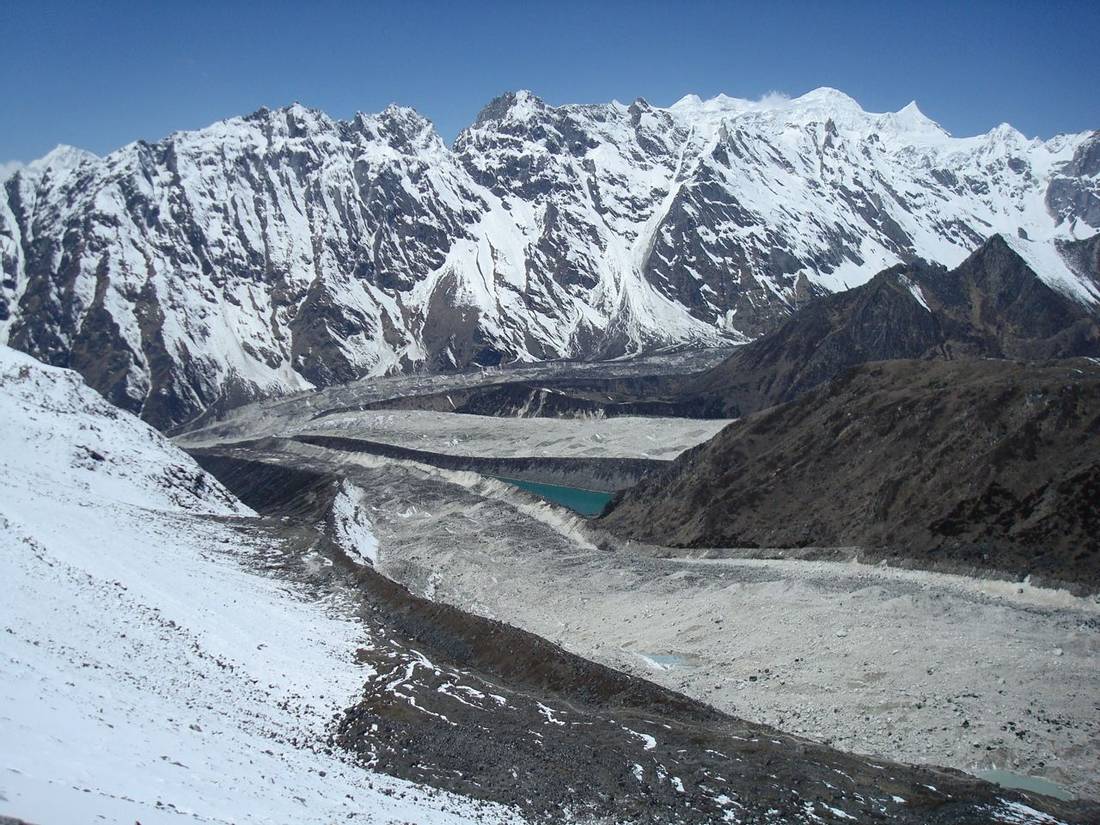
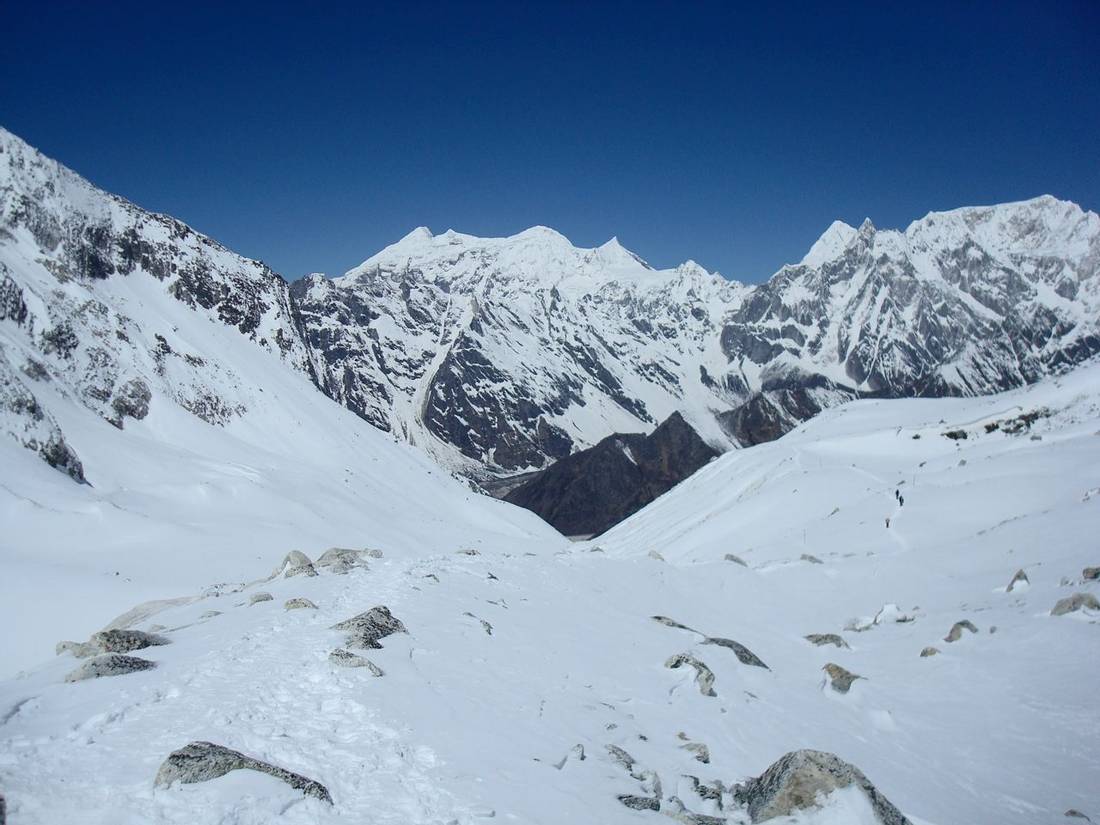
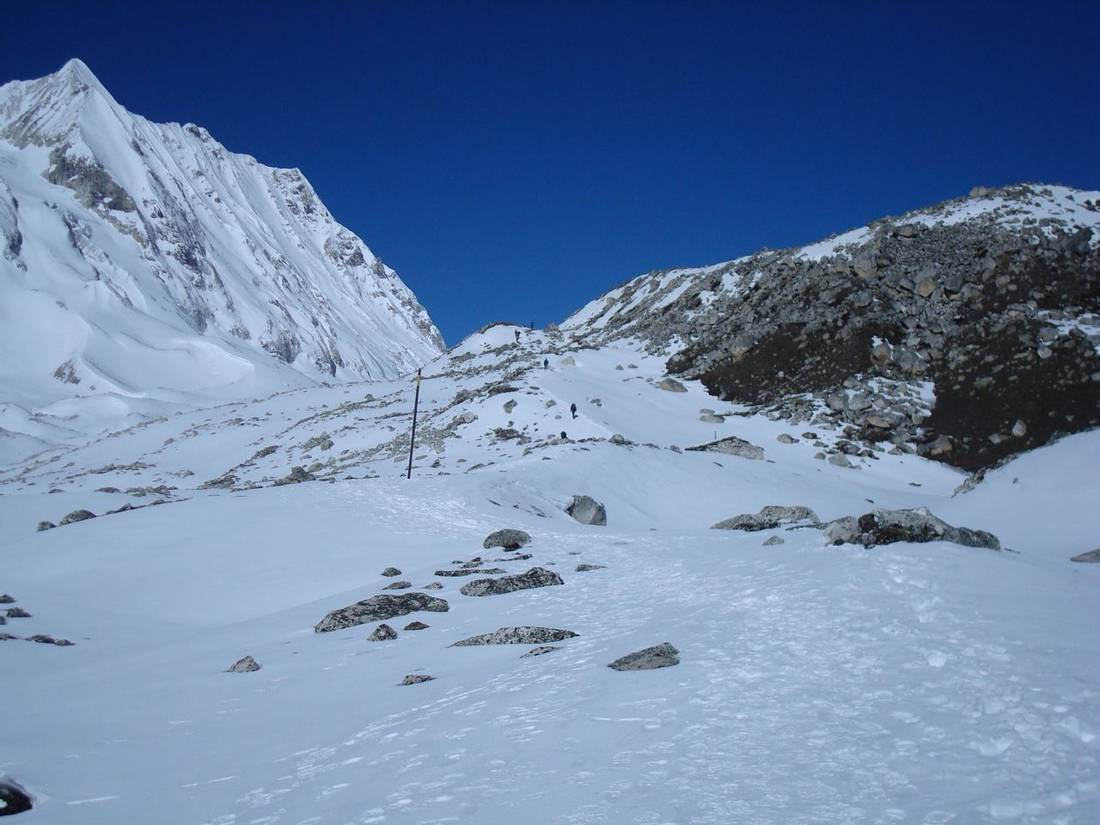
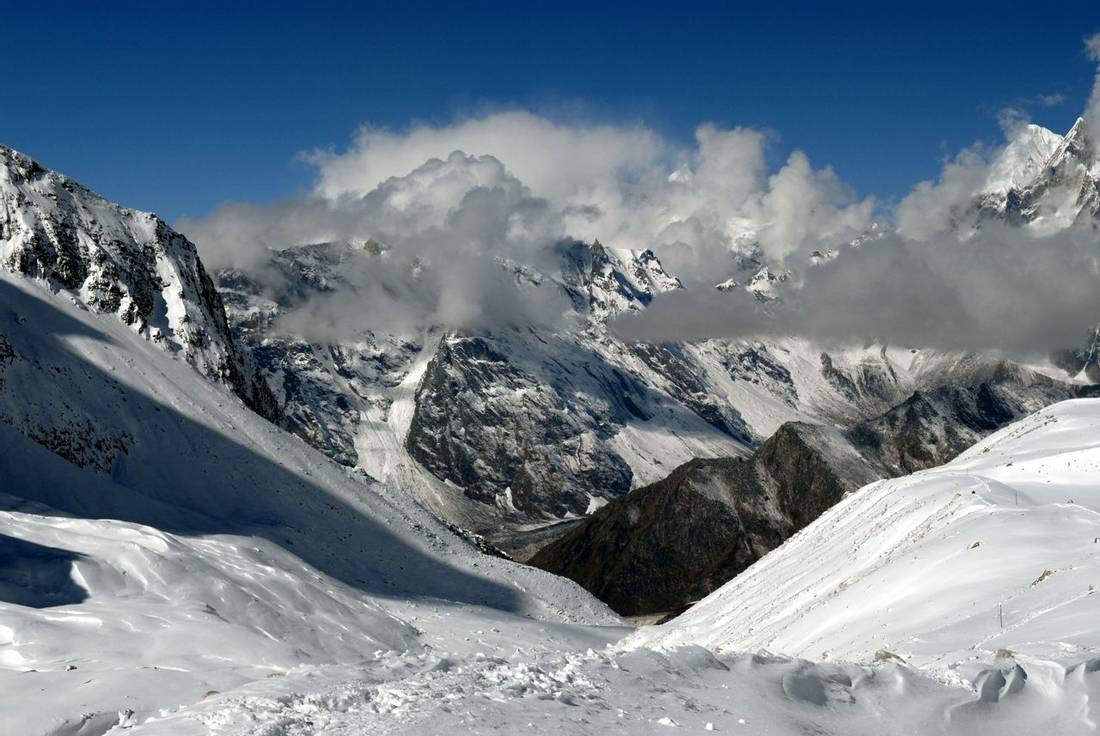
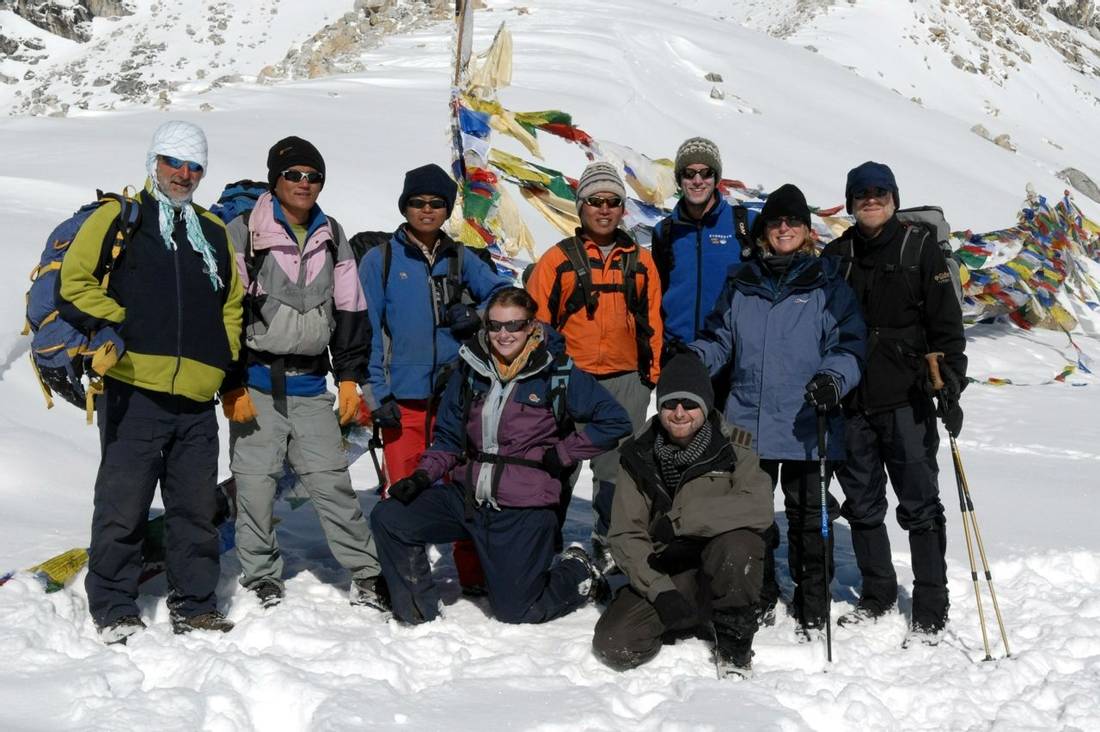
The crossing of the Larkya La (5,215m) is the crux of the trek. After exploring the Tsum Valley and the side trips on the Manaslu Circuit built into our itinerary your body will be well-acclimatised and ready. You will begin an early morning alpine ascent (typically starting around 4 to 5:00 AM) with headlamps switched on and warm layers zipped tight. The trail winds steadily upward through frozen glacial moraines, passing rocky plateaus and lateral glaciers. As the sun rises, the stark, Tibetan-influenced landscape reveals itself, culminating in the prayer-flag-strewn summit of the Larkya La Pass (5,215m). From the top, you are rewarded with a a 360-degree panoramic amphitheatre of Himalayan giants, including Manaslu (8,163m), Himlung Himal (7,126m), Cheo Himal, and Annapurna II.
After celebrating at the summit, the journey transitions into a long descent and is quite steep in places. The conditions for crossing the pass vary depending on time of year. We include micro crampons, gaiters and walking poles in our kit list. You will use this equipment if the pass is icy and slippery. After leaving the rock and ice behind, we descend into a lush, green alpine valley. Your destination is Bimtang (3,590m), a beautiful valley meadow flanked by the massive west face of Manaslu. Arriving here brings a deep sense of achievement, thicker air, and a well-deserved warm meal.
The trek to Tilje follows a very picturesque trail that is one of the highlights of the entire trip. You descend in altitude and pass through alpine meadows, rhododendron and pine forests with glimpses of Himalayan peaks. The day begins in the wide valley of Bimtang and the trail starts by dropping down into the lateral moraine of the Bimtang glacier. You will cross a few wooden bridges over glacial meltwaters before entering a moss-draped forest of rhododendron to the settlement of Hampuk. Continuing down, the trail hugs the west bank of the Dudh Khola (Milk River). You will pass through Pukkar and Karche (2,700m), a popular lunch spot. Past Karche, you will face a short, sharp climb over a ridge before dropping back down to the riverbank. You'll pass through farmland, terraced fields, and small seasonal settlements like Gho (Goa). The valley narrows here, and in places we follow a jeep track. You will eventually cross a suspension bridge to the east side of the river and into Tilje (2,300m).
As the road now extends to Tilje, we start our drive from this village. It will be a bumpy ride but we feel that it is a better option rather than walking on a dusty road with passing vehicles. It is scenic as we see the steep walls of the Marsyangdi Valley and finally, the houses of Dharapani appear in the distance. We pass through Thonje and Dharapani lies across a long suspension bridge over the Marsyangdi river. After Dharapani we are now on the popular Annapurna Circuit and we continue the drive to Besisahar. After reaching Besisahar, we switch vehicles to our private bus sent from Kathmandu to collect you. From here, we drive on a black-topped road down to the main Pokhara to Kathmandu highway. Then we drive up to the traditional Newari town of Bandipur where we stay the night in a hotel. We stay at The Old Inn in Bandipur, this is a lovely hotel in a traditional house in the main square of Bandipur.
Bandipur is a small town located on a ridge above the Kathmandu to Pokhara road and has superb views of the Himalayan peaks to the north (Annapurna, Dhaulagiri, Manaslu, and Ganesh Himal). Bandipur has been considerately developed for tourists whereby some of the old houses have been carefully converted to hotels and there are thankfully few concrete buildings like elsewhere in Nepal. Compared to the hustle and bustle of Kathmandu the small town of Bandipur is a very peaceful place as vehicles are not allowed into the main square.
Today we drive back to Kathmandu on the main highway from Pokhara.
Transfer to Kathmandu airport for the flight back home. End of trip.
Dates & Prices
2026
| Dates | Trip Leader | Price | Single Supplement: Room/Tent | Availability | |
|---|---|---|---|---|---|
| Dates 17 Oct 2026 to 07 Nov 2026 | Trip Leader Local Leader | Price US$3,430pp |
Single Supplement: Room/Tent US$250pp / NA |
Availability 2 Left to Guarantee | Book Now |
| Dates 31 Oct 2026 to 21 Nov 2026 | Trip Leader Local Leader | Price US$3,430pp |
Single Supplement: Room/Tent US$250pp / NA |
Availability Guaranteed | Book Now |
| Dates 07 Nov 2026 to 28 Nov 2026 | Trip Leader Local Leader | Price US$3,430pp |
Single Supplement: Room/Tent US$250pp / NA |
Availability Full | Book Now |
| Dates 14 Nov 2026 to 05 Dec 2026 | Trip Leader Local Leader | Price US$3,430pp |
Single Supplement: Room/Tent US$250pp / NA |
Availability Guaranteed | Book Now |
2027
| Dates | Trip Leader | Price | Single Supplement: Room/Tent | Availability | |
|---|---|---|---|---|---|
| Dates 17 Apr 2027 to 08 May 2027 | Trip Leader Local Leader | Price US$3,450pp |
Single Supplement: Room/Tent US$295pp / NA |
Availability 2 Left to Guarantee | Book Now |
| Dates 16 Oct 2027 to 06 Nov 2027 | Trip Leader Local Leader | Price US$3,450pp |
Single Supplement: Room/Tent US$295pp / NA |
Availability 2 Left to Guarantee | Book Now |
| Dates 30 Oct 2027 to 20 Nov 2027 | Trip Leader Local Leader | Price US$3,450pp |
Single Supplement: Room/Tent US$295pp / NA |
Availability 2 Left to Guarantee | Book Now |
| Dates 06 Nov 2027 to 27 Nov 2027 | Trip Leader Local Leader | Price US$3,450pp |
Single Supplement: Room/Tent US$295pp / NA |
Availability 2 Left to Guarantee | Book Now |
For private and bespoke trip, please contact us
Enquire HereWhat's Included
- All internal transport and transfers including airport collections.
- Twin share room at Hotel Ambassador in Kathmandu and The Old Inn in Bandipur.
- One day sightseeing in Kathmandu with a Nepalese cultural guide and private vehicle including all entry tickets.
- All meals are included while on the trek. Breakfast only in Kathmandu and Bandipur. In total for Manaslu Circuit with Tsum, we provide 21 Breakfasts, 18 Lunches, and 17 Dinners. The meals at the teahouse lodges cost in the region of £425 (US$595) per person. You can select your dishes from the menu at the lodge. The trek meals are breakfast, lunch, afternoon tea, and dinner. Breakfast includes cereal, porridge, or rice pudding and an egg dish with bread or toast. Lunch includes one dish such as fried rice, dal bhat, momos, or pasta. For afternoon tea, you get a hot drink plus biscuits. Dinner is two courses including soup and the main dish chosen by you from the menu. You are allowed two cups of hot drinks per meal so this means a total of seven cups per day.
- Twin-share room with common bathroom at the teahouse lodge while on trek.
- All trekking arrangements including permits and fees, trekking guide(s), and porter(s). We provide one trekking guide for a group size of two people and two guides for a group size of three people and three guides for a group size of six people plus.
- Weather forecasts for the Manaslu region during your trek.
- Thuraya satellite phone to ensure our guides have reliable communications with us for logistics, planning, and group safety.
- Manaslu trekking map is given to you on arrival to Kathmandu.
- UK-registered charity, Pipal Tree, will plant 7 trees for Manaslu Circuit with Tsum for you in the Gurkha Memorial Forest in southern Nepal.
- Full financial protection for bookings from the UK and internationally (ABTOT). Our Air Travel Organiser’s Licence (ATOL) number is 10921. Our Association of Bonded Travel Operators Trust (ABTOT) membership number is 5365).
- Pre-departure support and advice from The Mountain Company by email, phone, Zoom, or face-to-face meetings. After booking with us we will send our comprehensive “Nepal Pre-Trip Information” notes.
What's Not Included
- International flight to/from Kathmandu.
- Travel & trekking insurance.
- Nepal visa for 30 days at US$40.
- Lunch and evening meals in Kathmandu and Bandipur.
- Personal clothing & equipment please see the Appendix for suggested kit list.
- Tips to the trek crew. Each trekker should budget for giving tips into the group fund. This should be in the region of 20,000 Nepalese rupees (approx. £145 or US$115).
- Other items not listed in “What is included”.
Accommodation
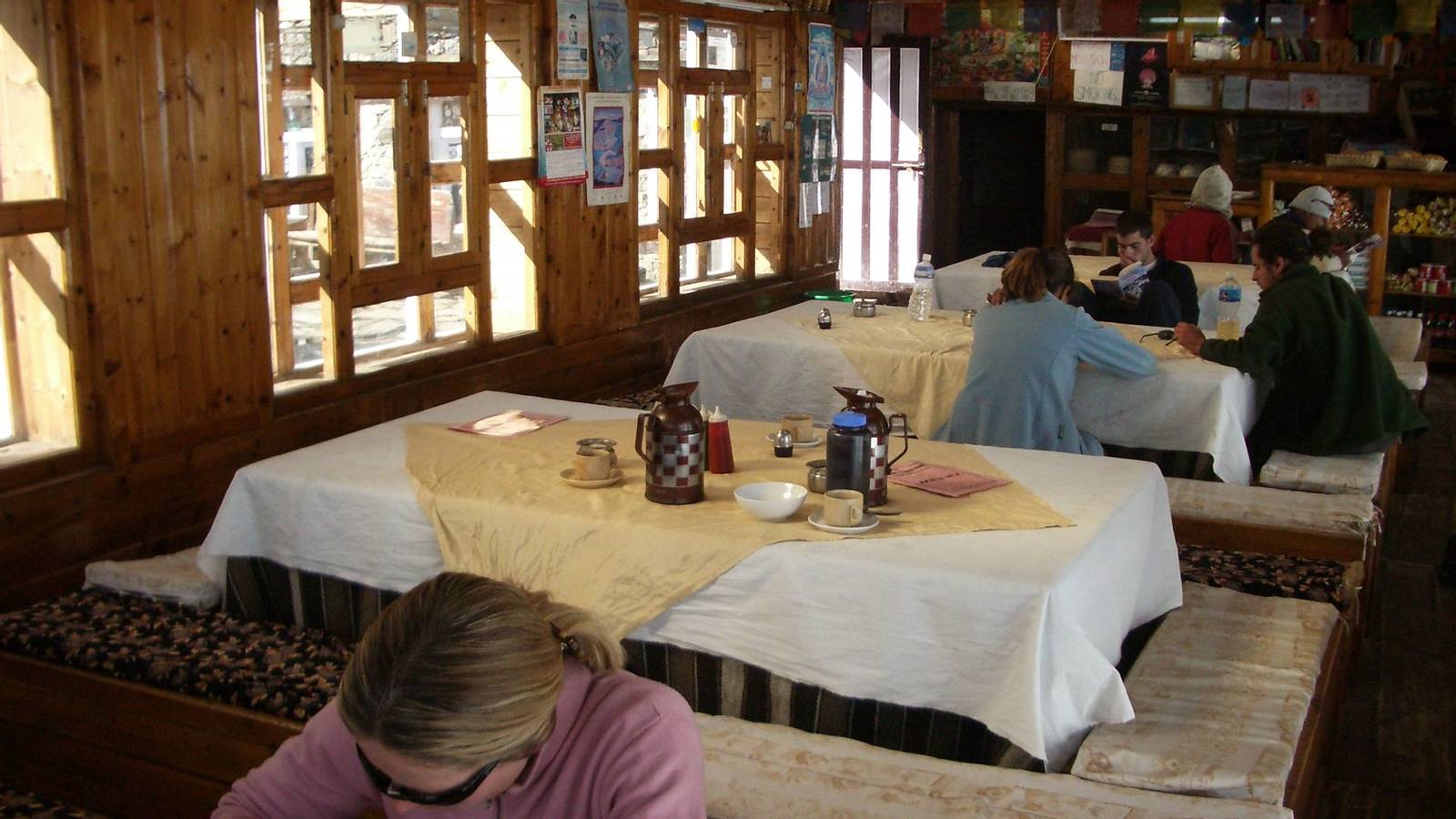
Teahouse lodge in Nepal
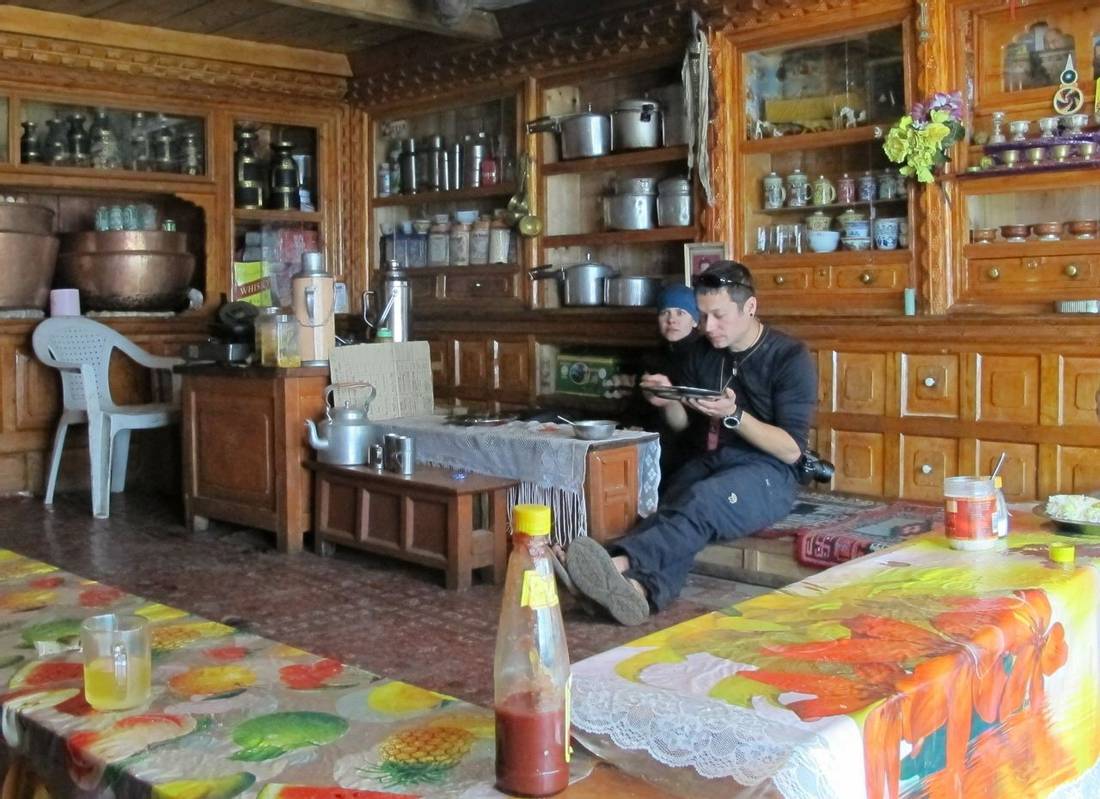
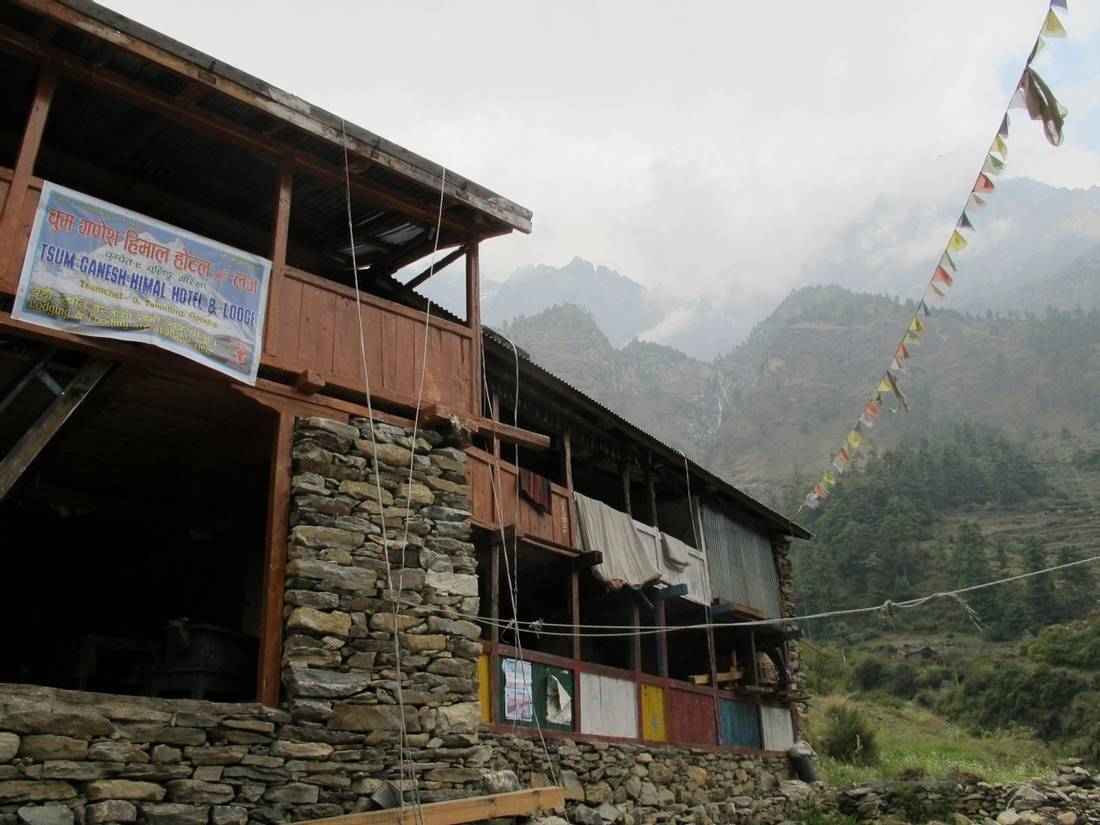
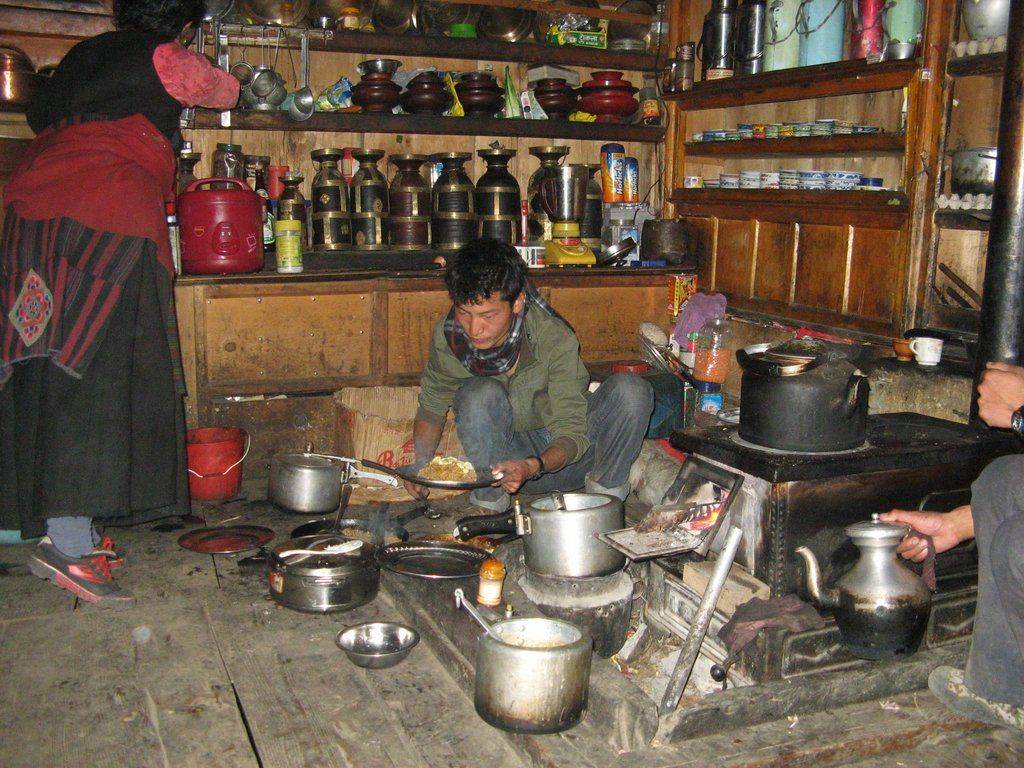
While on a teahouse lodge trek in Nepal, there are twin share rooms with common bathroom and a heated communal dining room. We regularly inspect and select the best lodges in each location.
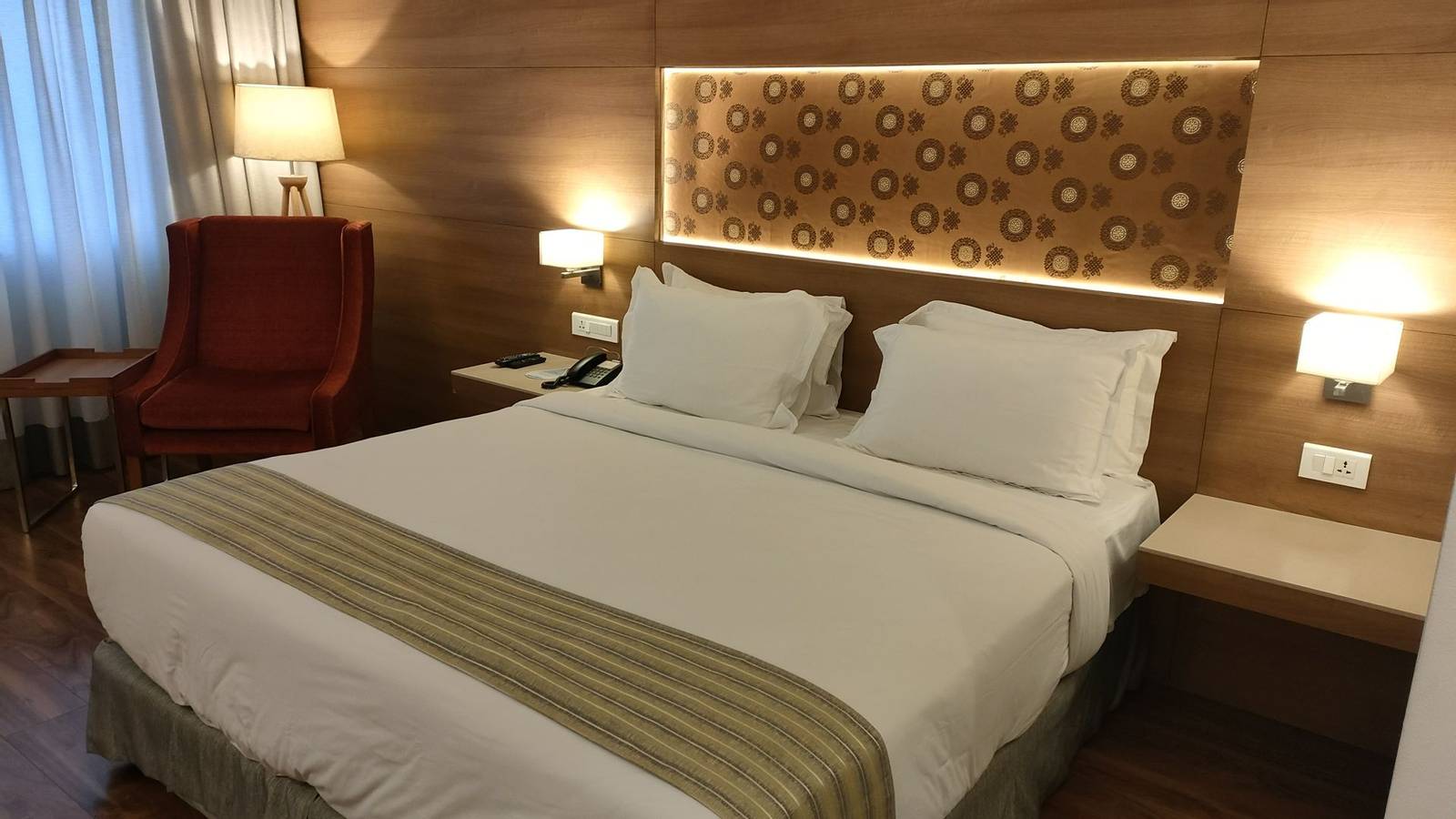
Hotel Ambassador in Kathmandu
We have used Hotel Ambassador in Kathmandu for our groups since it was rebuilt in 2017. Since then we have received positive feedback on their service and location. This is our first choice hotel for trekking groups in Kathmandu. Rooms are well appointed with a reliable supply of hot water for use in the shower. The windows have double glazing so it keeps the rooms very quiet. They serve an excellent breakfast buffet from 7am to 10am. A sundowner on their rooftop bar and restaurant called Foreign Affairs is a must do!
Practical Information
Meal Plan
We include all meals at the teahouse lodges (breakfast, lunch, afternoon tea, and dinner) while on the trek. Importantly, we clearly define what dishes and drinks we provide so there is no confusion in terms of what is allowed. Given the amount of food and drinks we include, there should be no need to spend any extra money on additional food. However, some people will pay for extra treats along the way such as to get cake and a coffee at the bakeries and cafes!
If you are comparing our prices with other operators you should be careful to compare apples with apples. These days many operators do not include meals in their packages when staying at the teahouse lodges. The food at the lodges is expensive and will cost an average of £25 (US$35) per person per day. If you are paying for the meals directly to the lodges you would need to carry a lot of cash including the tip money too. Having this amount of money with you will be a security risk and for peace of mind, it is better to pay for the meals to us when booking the trip. Also, it will be difficult to know in advance how much cash to bring with you on the trek (there are no ATMs when on trek). Furthermore, in practice, it will be complicated and time-consuming for you and the guides to work out individual bills after checking out each day from the lodge.
With our meal plan, you can select your dishes from the menu at the lodge. In our package, we include the cost of your breakfast, lunch, afternoon tea, and dinner. Breakfast includes cereal, porridge, or rice pudding and an egg dish with bread or toast. Lunch includes one dish such as fried rice, dal bhat, momos, or pasta. For afternoon tea, you get a hot drink plus biscuits. Dinner is two courses including soup and the main dish chosen by you from the menu. You are allowed two cups of hot drinks per meal so this means a total of seven cups per day.
We cater to a variety of dietary requirements. There are always meals that are suitable for vegetarians. During booking, we find out if you have any dietary needs and agree upon meal plans before departure. If you have any questions about the food provided please get in touch with us to discuss further.
Communications
We bring a Thuraya satellite phone for logistical, safety and personal use. Personal calls charged at £4 (US$5 or €4.50) per minute and £2 (US$3 €4.50) to send and receive SMS text.
Kit List for Manaslu Circuit
This is the mandatory kit list for the safety of everyone in the group and to ensure a successful trek. You must have the following items tailored for the Manaslu Circuit trek. The group leader will check your gear in Kathmandu before departure for the trek.
As a reminder, the weather on this trek will vary from season to season and day to day as you ascend to higher elevations. At the start of the trek, you will experience warm conditions with temperatures up to 25 Celsius. You experience the coldest temperatures in Dharamsala (Larkya Phedi) at an altitude of 4,460m. Overnight lows here will be down to around -12 Celsius.
You should bring a rucsac or backpack for gear required during the day. Your pack should contain items such as warm clothes, a jacket, a camera, water bottles, a personal first aid kit and snacks. The weight limit is 5kg. A porter will carry the rest of your personal equipment packed in a duffel or kit bag. The weight limit for your duffel bag is 15kg. Please mark your bag on the outside for easy identification.
Print the kit list and tick items off as you pack them then weigh your kit bag before you come on trek.
Footwear
- Walking Boots. A pair of water-repellent boots with ankle support. Boots must be in good condition, the best approach is to get new boots and break in before the trek.
- Trail shoes. Used around the lodge.
- Walking socks.
For crossing the passes
- Trekking poles. Two poles are mandatory for your safety. These will be helpful on steep sections of the trail and river crossings. Also for walking on snow or ice higher up.
- Kahtoola Microspikes or YakTrax Summits. These are for your security when descending passes with snowy or icy conditions. They fit onto your walking boots.
- Gaiters. A pair of knee-high gaiters used to keep boots dry if walking through snow or on wet ground.
Clothing
- Waterproof and Windproof jacket (with hood) and trousers (Goretex or similar). For use if it rains or snows during the trek and in windy conditions.
- Trekking trousers.
- Soft Shell Trousers.
- Long-sleeved tops or shirts (not cotton).
- Micro fleece.
- Mid to heavyweight fleece or synthetic/ primaloft top.
- Sleeveless/ gilet or body warmer type fleece / synthetic top. This will help keep your core warm while not bulking when layering up. Gilet is used in combination with base layers, other fleeces and a down jacket. This provides the most warmth and insulation.
- Thermals or base layer for top & bottom (merino wool or synthetic).
- Fleece or synthetic leggings. Worn around the camp or added as a layer when the temperatures start to drop higher up.
- Medium-weight down jacket.
Head and Gloves
- Fleece gloves.
- Warms mittens and/or gloves.
- Wool or fleece hat.
- Sun hat.
- Bandana or scarf (eg. Buff Headwear)
- Head torch. Bring extra batteries.
- Sunglasses. They should have side protection or a wraparound design.
Personal equipment
- Sleeping bag. Overnight lows down to -12 Celsius. It is possible to rent a bag from Shonas Rental in Kathmandu.
- Fleece or silk liner for your sleeping bag. A liner protects your sleeping bag from getting dirty. Also helps by adding extra insulation to keep you warm at night.
- Day pack. The recommended size is around 30 litres. You need to have enough space to carry water bottles, a camera, snacks and extra clothing. The pack should have a good waist belt. It is also a good idea to bring a rain cover to keep the contents dry.
- Trekking poles. Two poles are mandatory for your safety. These will be helpful on steep sections of the trail and river crossings. Also for walking on snow or ice higher up.
- Stuff sacks for keeping your gear dry and organised. Or even better are fold dry bags such as from Exped.
- Two water bottles. Nalgene wide-mouth bottles are the best. You may use a hydration pack lower down but the tube will freeze in the cold so ensure you still have two water bottles.
- Pee bottle. Recommended as means you do not have to get up to find the toilet tent at night! For men, you can use an old water bottle. For women take a look at SheWee.
- Sunscreen and lip salve with a high SPF.
- Water purification tablets with chlorine dioxide. This kills bacteria, viruses, and cysts including Giardia and Cryptosporidium without leaving any residual taste, odour, or colour.
- Favourite snack food.
- Books and cards etc.
- Camera with spare batteries and memory cards.
- Insurance certificate.
- Earplugs (optional).
- Baby wipes (optional).
- Hand sanitizer. Keep this in your day pack for use after a toilet break during the trek or before eating any snacks. We provide sanitizer for use before meals.
Travelling
- Duffel bag for your personal gear on the trek. Will be carried by a porter. Rugged and waterproof made of a plastic material. Size 80-100 litres. Eg. Mountain Equipment or Rab. Bring a small combination padlock to secure the bag.
- Travel clothes. You will need casual clothing for air travel days and time spent in Kathmandu.
- Toiletry bag with soap, travel towel, toilet paper, toothbrush etc.
We provide a comprehensive group first aid kit. Please bring personal medications and other items you might use such as:
- Any personal medications.
- Blister treatment (Compeed patches are the best)
- Rehydration powder (eg Dioralyte).
- Analgesics (paracetamol, ibuprofen and aspirin).
- Plasters and zinc oxide tape.
- Throat lozenges.
- Diamox (helps with acclimatisation).
Risk assessment for Manaslu Circuit
You should be aware trekking in a developing country involves a risk of personal injury or death. You must accept these risks and be responsible for your own actions and involvement. Adventure travel requires an open and flexible attitude. You may experience extreme conditions and unpredictable weather. There could be last-minute changes to the itinerary beyond our control. The ability to work in a team is an important aspect of our trips.
We have performed a threat and risk assessment for our Around Manaslu trek. Our trips have a degree of risk. This is part of the attraction of adventure travel and why so many people choose to join this type of holiday. By identifying the hazards we assess the level of risk. We have control measures in place to reduce this happening or to reduce the impact.
Our risk assessment is available to clients on request. We have listed below a summary of the significant risks and hazards identified by us:
- Falls and trips resulting in physical injury eg. slipping on ice or falling off the path.
- Altitude sickness includes but is not limited to acute mountain sickness (AMS), high altitude cerebral edema (HACE), and high altitude pulmonary edema (HAPE).
- Getting lost or becoming separated from the group eg. crossing Larkya La pass in a whiteout.
- Climatic injuries (dehydration, sunburn, heat exhaustion, hypothermia or heat stroke). Please note during the months of April and October it will be very hot and humid for the first three days of the trek.
- Crossing a river with no bridge resulting in drowning and/ or a fall.
- Rockfall and landslides.
- Snow and ice avalanches.
- Lightning strike.
- Wildlife, pack animals (e.g. donkeys or horses), or stray dogs. Pack animals can knock people off the path. Dogs can attack and bite. Discuss rabies vaccination with your doctor.
- Earthquake.
- Risk of fire in the hotel or lodge.
- Endemic local diseases. Discuss vaccinations with your doctor before departure.
- Physiological injury. Such as heart attack, appendicitis, hernia, toothache, etc. in a remote area.
- Road traffic accident. We use a private bus from Kathmandu to Arughat and back from Besisahar to Kathmandu. Due to local rules, we cannot drive our bus to Machha Khola and Dharapani. It is necessary to use local jeeps for these sections of the road.
- Contaminated food and/ or water.
This trip visits a remote area. You are away from the usual emergency services and medical facilities. Evacuation for a serious injury requiring hospitalisation could take up to several days. This delay could impede your ensuing recovery. Helicopters are the usual means of evacuation. They are not always available or hindered by poor weather and flying conditions.
Weather and conditions for Manaslu Circuit
Manaslu Circuit trek itinerary has a wide range of temperatures. This depends on the season, altitude and time of day. In the mountains between 1,000m and 3,500m, the nights will be cool around 5 Celsius. During the day temperatures sometimes rise to 20 Celsius. At higher altitudes temperatures range from about 15 Celsius to -12 Celsius. The conditions of the Manaslu region are very similar to the more popular Annapurna region with Annapurna Circuit and Annapurna Base Camp treks.
The trekking season in Nepal is from late September to May. October and November is generally recognised as having the best weather. Spring is a popular time of year to trek the Manaslu Circuit with warmer weather than in Autumn. Also, there is the advantage of seeing spring flowers and rhododendrons in bloom.
We have written a blog article When is the best time to go trekking in Nepal Himalaya? This has information about the weather and conditions in Spring and Autumn seasons. It also explains the differences between the trekking regions of Nepal.
Trip Reviews
Review by CnN on 20/02/2026
The Manaslu Circuit with Tsum Valley is a lodge-based trek that attracts fewer visitors. The trek has two distinct parts: The Manaslu Circuit is classical Nepalese mountain walking, whereas the Tsum Valley is more cultural. It is worth noting that the Tsum Valley is now reasonably busy and is no longer “off the beaten track”. The Larkya La Pass day is probably one of the best single days walking in the Himalaya, you leave the lodge in the dark and experience sunrise before mountain vistas and panoramas open up on the pass and on the descent. The lodges and food are generally of ok quality, with power in rooms most of the way up, and most offer hot (for a fee) and cold showers, the exception is the lodge at Dharamsala – think lodges at Gorakshep, but not as good and in a harsher environment. Even in high season, if you can take breakfast at 6:30 you’ll be ahead of most groups and have quiet trails all the way round. Tip: If organising as a private itinerary, speak to Roland about options to fly back from Pokhara rather than enduring the drive from Bandipur to KathmanduThe Mountain Company is an established UK based trekking company specialising in Nepal Himalaya Treks. They attract a global clientele and deliver well-planned itineraries that have sufficient time for altitude acclimatisation, increasing the chance of successful completion. Feedback is actively sought after a trip, and changes/updates will be made if the company agrees with suggestions. ...
Show more Show lessReview by Jonty on 02/12/2025
Manaslu Circuit & Tsum - November 2025 The Manaslu Circuit with Tsum Valley is an understandably popular trek in Nepal, combining dramatic landscapes with rich cultural experiences. The Manaslu Circuit winds through deep gorges and climbs steadily to the 5,135m Larkya La pass. Along the way are views of Manaslu, the world’s eighth-highest mo untain. The six-day side trip into Tsum Valley is equally worthwhile, featuring beautiful monasteries and significant Buddhist sites. This was my first tea house trek after three camping treks with TMC, and there are pros and cons to compare. Tea houses usually provide power and WiFi (generally free), menus to choose from (though the options are the same throughout), and daily showers (usually cold). TMC cover five food choices plus seven hot drinks a day, and portions tend to be enormous — you definitely won’t go hungry. The itinerary builds in acclimatisation time, which is welcome, although around half the hiking days are relatively short, so bring something to keep you occupied in the afternoons. The local crew were excellent throughout. November proved an ideal month to trek, with clear blue skies every day — just make sure to bring warm layers for the higher sections. Be aware that word is well and truly out on both the Manaslu Circuit and the supposedly more remote Tsum Valley. Expect full tea houses, but if you start early the trails themselves are generally quiet. This was my fourth long trek with The Mountain Company (TMC), and once again I found them very good to deal with. Their organisation and communication are consistently first-rate. The high level of care and professionalism throughout reinforced why I keep coming back to TMC for my Himalayan treks. ...
Show more Show lessReview by DouglasL on 03/04/2024
I can highly recommend the Manaslu Circuit with Tsum Valley trek. This was my second visit to Nepal and I wanted to get up into the high Himalayas and a bit more off the beaten track. This trek did not disappoint. If you can find the time adding the Tsum Valley to the Manaslu Circuit is a must. It is a wonderful hidden valley of ancient Buddhist mo nasteries and temples. For me, that was the highlight. Despite the remoteness, the tea houses were better than I had expected. The joy of the trek is the journey through a stunningly beautiful landscape at walking pace. The Mountain Company is spectacularly efficiently run. It was reassuring to know that if anything did go wrong they would have it in hand. The trek was an amazing adventure. ...
Show more Show lessGallery